
By Sara Kooperman, JD
As adults age, maintaining mobility, strength, and function becomes increasingly essential—not just for fitness, but for preserving independence, preventing injury, and supporting the active lifestyles so many older adults enjoy. Whether they participate in golf, pickleball, gardening, aquatic exercise, or group fitness classes, their warm-up routine can determine whether they move comfortably and confidently… or experience pain, stiffness, and avoidable injury.
 Understanding the physiology of aging joints and muscles allows fitness professionals to create warm-ups that prepare the body safely and improve performance. This article explains why specific warm-up elements matter—especially for hands, wrists, shoulders, ankles, and hips—and outlines practical strategies to help older adults move better and reduce injury risk.
Why Warm-Ups Must Be Different for Older Adults
Warm-ups do more than “loosen up” the body. They stimulate circulation, improve neuromuscular recruitment, activate stabilizing muscles, and prepare joints to move through their full, healthy range of motion.
But with aging, several physiological changes occur:
- Muscle fibers and motor units decrease
- Joint cartilage thins
- Synovial fluid production slows, making joints feel stiff
- Reaction time and coordination decline
- Balance becomes more challenging
- Tendons and ligaments lose elasticity, increasing injury risk
For these reasons, older adults benefit from warm-ups that are slower, more intentional, and more joint-focused than those designed for younger populations.
Upper Body Warm-Up: A Critical Priority
Why Hand and Wrist Preparation Matters:
Hands and wrists are often overlooked, but for older adults they are foundational to safe movement. Arthritis is extremely common, and gripping objects—weights, sticks, paddles, or flotation equipment—can cause pain if joints are not prepared.
Hand, wrist, and forearm warm-ups help to:
- Increase synovial fluid circulation
- Improve mobility in the small joints
- Prime the neuromuscular system for gripping and stabilizing
- Reduce compensatory movements that lead to elbow and shoulder strain
- When the wrist and shoulder joints are stiff, the elbow is forced to “twist” beyond its natural hinge function—leading to irritation and injury.
This is especially important because wrists and shoulders are synovial joints capable of multi-directional movement. (The wrist is actually a condyloid joint with flexion/extension + radial/ulnar deviation; the shoulder is a full ball-and-socket joint.) Elbows are hinge joints, not designed to rotate significantly. Forced rotation = injury.
Effective Warm-Up Movements:
- Open and close hands
- Wrist circles
- Gentle wrist flexion/extension
- Elbow mobility
- Shoulder rolls + arm circles
These movements are crucial for safe participation in programs requiring gripping—especially for older adults who love pickleball, tennis, weight training, or aqua equipment.
Shoulder Warm-Up: Protecting One of the Most Vulnerable Joints
The shoulder joint is one of the most mobile but also one of the least stable joints in the body. Aging adults are more susceptible to:
- Rotator cuff irritation
- Impingement
- Limited overhead mobility
- Decreased strength in stabilizing muscles
Warm-ups must include:
- Scapular mobility
- Rotator cuff activation
- Gentle overhead range of motion
- Postural alignment
 Preparing the upper body is essential not only for safe exercise, but also for daily tasks such as lifting groceries, reaching overhead, carrying objects, household chores, and recreational sports such as golf, pickleball, and swimming.
Warm-ups help restore movement patterns that become restricted with age and inactivity.
- Lower Body Warm-Up: Hips, Ankles & the Shuffling Problem
- Hip & Ankle Mobility: The Foundation of Safe Walking
- Like the shoulder, the hip is a ball-and-socket joint designed for multi-directional movement—flexion, extension, rotation, abduction, and adduction.
However, with age hip mobility decreases, stability muscles (glutes, deep hip rotators) weaken, posture shifts; creating stress on knees and lower back, ankles (hinge joints with small rotational capacity) also stiffen, reducing balance and gait efficiency.
Warm-up goals:
- Increase ankle dorsiflexion
- Improve hip rotation
- Prepare the knees by moving joints above and below them
Why Aging Adults Shuffle — and Why It Must Be Addressed
As adults age, research shows they lose motor units; the nerve + muscle fiber connections responsible for strength and coordination. This especially affects the anterior tibialis (shin muscle) and intrinsic foot muscles,
When these weaken, the calf muscle (gastrocnemius-soleus complex) takes over, creating a plantar flexion dominance (pointing the toes).
This causes:
- Toe drags
- Shuffling
- Trips and falls
- Difficulty walking with a proper heel-to-toe pattern
Corrective Strategy: Dorsiflexion – Teaching participants to lift the toes (dorsiflex) activates the shin and restores safer gait mechanics.
Warm-up drills can include:
- Heel lifts + toe lifts
- Marching with dorsiflexion
- Ankle circles
- Slow stepping patterns focusing on foot clearance
These warm-ups support strength, cardio & aquatic workouts, whether it is land-based or aquatic, upper body and lower body warm-up routines improve safety and performance.
For aquatic exercise:
- Hands and wrists must grip flotation devices securely
- Shoulder mobility prevents overuse tension during sculling
- Hips and ankles allow effective travel, balance, and suspended posture
- Dorsiflexion prevents foot dragging along pool surfaces
For strength training:
- Wrist mobility prevents strain during holding weights
- Shoulder warm-ups protect the rotator cuff
- Hip mobility improves squat depth
- Ankle mobility improves balance and stability
For daily life tasks:
- Opening jars
- Picking up grandchildren
- Getting in/out of cars
- Walking safely
- Playing recreational sports
- Carrying shopping bags
Warm-ups truly translate into better function and independence.
A Physiology-Based Warm-Up Sequence for Active Agers
1. Hands & Wrists (1–2 minutes)
- Finger flexion/extension
- Wrist circles
- Wrist waves
- Gentle gripping and releasing
- Shoulders & Upper Body (2–3 minutes)
- Shoulder rolls
- Arm circles
- Scapular retraction
- Overhead range-of-motion
- Hips & Ankles (2–3 minutes)
- Marching with dorsiflexion
- Hip circles
- Knee lifts
- Ankle circles
- Gentle Whole-Body Movement (2 minutes)
- Side stepping
- Slow gait rhythm
- Light travel patterns
 This sequence prepares every major joint and movement pathway older adults need for safe exercise.
A warm-up tailored to older adults is not optional, it’s essential! Understanding how joints function, what changes with age, and how to activate the right muscles can dramatically reduce injuries and enhance movement confidence. When instructors prioritize proper warm-ups for the hands, wrists, shoulders, hips, and ankles, they empower older adults to participate fully in fitness activities and daily life with improved strength, balance, and resilience.
Supporting active agers means giving them the tools to stay mobile, independent, and vibrant—warm-ups are the first step toward that goal.

About the Author: Sara Kooperman, JD
Sara Kooperman, JD, CEO of SCW Fitness Education, WATERinMOTION®, and S.E.A.T. Fitness, Founder of the MANIA® Convention, sits on the canfitpro Advisory Panel and the Gold’s Gym Think Tank and was a founding board member for the Women In Fitness Association (WIFA). Recently nominated for the IDEA Fitness Leader of the Year Award, Kooperman won the Most Innovating Fitness Pro by FIT-C (Fitness Industry Technology Council). Sara is the best-selling author of FIT FOR BUSINESS, an inductee into the National Fitness Hall of Fame, an Illinois State Businesswoman of the Year, esteemed panelist for multiple Webinars & Podcasts, and sits on the ACSM Communication & Public Information Committee.
By Kathleen Haden
 Water carries vibration efficiently. Sound organizes vibration. When combined intentionally, they create a powerful environment for regulation, restoration, and healing.
At Aqua Motion Movement®, years of research and clinical observation led to the development of Liquid Harmony™—an underwater speaker system designed to deliver Frequency Infused Music® directly into water. Unlike recreational pool audio, Liquid Harmony is built to support therapeutic outcomes by transmitting sound through the body’s fluid systems rather than through air alone.
Sound travels approximately four times faster in water than in air (Urick, 1983). In aquatic environments, sound waves are absorbed not only through the ears, but through skin, connective tissue, and bone conduction. Because the human body is composed of roughly 70% water, underwater sound is experienced as a whole‑body phenomenon rather than a purely auditory one.
Frequency Infused Music® (FIM) is intentionally composed and recorded using 432 Hz tuning and embedded therapeutic frequencies. Research in music therapy and neuroscience demonstrates that frequency‑based sound can support nervous system regulation, encourage parasympathetic activation, and assist with stress reduction (Thaut, 2005; Koelsch, 2015).
When delivered through water using Liquid Harmony™, these effects are amplified. Warm water alone has been shown to reduce muscle tension, decrease joint compression, and calm the autonomic nervous system (Becker, 2009). Adding structured sound introduces rhythm and vibration, which further supports relaxation, emotional release, and sensory integration.
 Practitioners using Liquid Harmony™ in Aqua Motion® sessions consistently report reduced anxiety, improved body awareness, and deep states of calm among participants. The experience is immersive yet gentle, allowing individuals to feel supported rather than stimulated.
Liquid Harmony™ is currently being integrated into spa pools, aquatic therapy programs, flotation sessions, and rehabilitation environments. Its non‑invasive nature makes it adaptable across clinical and wellness settings.
As interest grows in integrative and evidence‑informed therapies, sound and water are re‑emerging as powerful tools for healing. Liquid Harmony™ represents a bridge between ancient wisdom and modern acoustic science—bringing intention, vibration, and water together in service of well‑being.
References:
Urick, R. J. (1983). Principles of Underwater Sound.
Thaut, M. H. (2005). Rhythm, Music, and the Brain.
Koelsch, S. (2015). Brain correlates of music‑evoked emotions.
Becker, B. E. (2009). Aquatic therapy: scientific foundations.

About the Author: Kathleen Haden, MBA
Kathleen Haden, MBA, is a kinesiologist, aquatic specialist, and sound therapist with over 25 years in the wellness industry. She is the CEO of Good Vibrations Music co & Aqua Motion Movement® and co‑creator of Frequency Infused Music®, pioneering the integration of sound, water, and movement for therapeutic applications worldwide. Contact Kathleen @ www.goodvibrationsmusicco.com/kathleenhaden@gmail.com
Fitness Pros require continuing education and SCW Fitness has you covered with flexible, high-impact education. From in-person conventions to immersive virtual summits, you can stay current on research, programming, and performance—on your schedule.
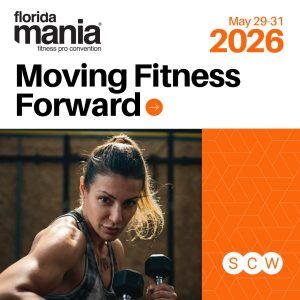 One of the year’s premier in-person conventions is now open for registration. Florida MANIA®, May 29–31 at the Caribe Royale Orlando brings together hundreds of fitness professionals for hands-on workshops, expert-led sessions, and valuable networking. With a variety of sessions that support aquatic instructors, it’s an energizing way to expand your skills while learning alongside industry leaders.
If you work with older adults, the Active Aging Summit (March 21–22, live on Zoom) delivers focused education on longevity, functional movement, brain health, nutrition, and total wellness. With 80+ sessions and up to 15 CECs/CEUs available, this two-day experience equips you with research-backed strategies to confidently serve the growing 55+ population.
For those looking to elevate their nutrition expertise, the Nutrition Coaching Summit (May 16–17) offers 36 in-depth sessions on food choices, behavior change, sleep, and recovery. It’s ideal for professionals who want to integrate smarter coaching strategies into their aquatic or land-based programming. Register today and learn in real-time or on your own schedule.
Prefer learning from home? Live Stream MANIA® (April 18–19) is back and provides 108 high-quality sessions streamed directly to you over two inspiring days, making it easy to earn credits without travel time or added expense.
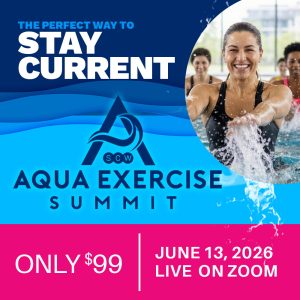 Aquatic professionals can also connect virtually at the SCW Aqua Ex Summit (June 13–14) for only $99. Designed specifically for Aqua instructors, this event features 30+ sessions exploring technique, choreography, program design, and the latest aquatic research—all accessible without stepping onto a pool deck.
The education continues throughout the year with additional in-person opportunities including Atlanta MANIA, Dallas MANIA, Midwest MANIA, and Boston MANIA—each offering diverse sessions, industry networking, and continuing education credits.
With live, virtual, and recordings-only options available, 2026 makes it easier than ever to stay educated, inspired, and competitive in the aquatic fitness industry.
From the SCW Team to yours, we’re here to help you stay inspired, educated, and ahead of the competition. SCW Fitness—The World’s Leader in Health & Fitness Continuing Education.
We can’t wait to see you at an event in 2026!
By WATERinMOTION®
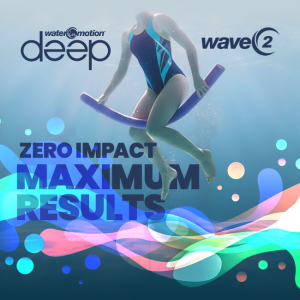
When the body leaves the pool floor and moves into full suspension, aquatic training changes completely. Without ground contact, impact disappears—yet muscular demand increases. Participants must control alignment, manage turbulence, and generate movement using water resistance alone. The result is joint-friendly conditioning that challenges strength, stability, and cardiovascular endurance simultaneously.
 Why Suspension Works
Deep-water exercise is grounded in the unique physics of water. Buoyancy decreases gravitational load, reducing joint compression and making movement accessible for individuals with orthopedic concerns. Hydrostatic pressure supports circulation and enhances proprioceptive awareness. Drag resistance responds instantly to speed and surface area, meaning intensity can be adjusted simply by changing lever length or tempo.
Because there is no foot strike, the cardiovascular system works harder while the joints remain unloaded. This combination allows for powerful conditioning without impact stress.
Core Activation and Neuromuscular Control
Suspended participants must stabilize continuously. Without the feedback of the pool floor, postural muscles remain active to maintain vertical alignment. The abdominals and back muscles engage reflexively, while limbs move against multidirectional resistance. Over time, this improves balance, coordination, muscular endurance, and overall neuromuscular efficiency.
Instability is expected—but intentional control must lead every movement. Cueing tall posture, neutral spine alignment, and steady breathing helps participants avoid over-tension and unnecessary fatigue.
Safety First in Deep Water
Effective suspended training begins with preparation. Flotation belts should be inspected and properly fitted—secure but comfortable, allowing full breath expansion. Ideal suspension typically occurs in water deeper than five feet, though shallower pools can work with additional buoyancy and shorter lever positions.
Instructors must review participant considerations, understand emergency protocols, maintain CPR/AED certification, and communicate clearly with lifeguards when present. Because suspended formats elevate heart rate quickly, fatigue management is essential. Encourage self-monitoring, incorporate posture resets, and prioritize alignment before speed.
Equipment and Alignment Essentials
Proper flotation allows participants to maintain a vertical line from ears to ankles. Belt size should match individual body composition and comfort level. More muscular participants may require greater buoyancy; those with higher natural flotation may require less. Adjustments should occur during warm-up to ensure stability before intensity increases.
Gentle sculling can assist beginners in finding balance. As confidence grows, reliance on the arms for stabilization decreases and purposeful movement patterns take priority.
Programming Progressions
Well-designed suspended classes move from simple to complex. Begin with vertical, stationary patterns—jogging, cross-country movements, and controlled jacks—to establish rhythm and alignment. Progress to longer lever actions to increase drag and muscular demand. Add traveling propulsion drills to introduce power and turbulence. Multidirectional intervals and speed changes elevate cardiovascular intensity while reinforcing neuromuscular control.
Balance-focused segments, isolated upper- and lower-body work, and core-centered drills further enhance training benefits. A gradual mobility-based cool-down restores range of motion and lowers heart rate, reinforcing recovery.
 Adaptability Across Populations
Suspended aquatic training is remarkably inclusive. Older adults benefit from controlled tempos and posture emphasis. Individuals with arthritis or joint sensitivity appreciate the zero-impact environment. Pre- and postnatal participants require alignment awareness and breath control. Deconditioned individuals thrive with rhythmic, confidence-building progressions. Modifications expand accessibility rather than limit results.
Even facilities without a traditional deep end can replicate suspension by positioning participants in the deepest available space, shortening lever lengths, increasing buoyancy, and using arm-driven lift to maintain minimal foot contact.
The Power of Suspension
When structured thoughtfully, deep-water programming delivers cardiovascular conditioning, muscular endurance, core stability, and balance development—without joint compression. It is demanding yet protective, challenging yet accessible.
This philosophy of controlled suspension, precise cueing, and purposeful progression defines the experience of WATERinMOTION® DEEP, where zero impact meets maximum engagement in the aquatic environment.

 After an aquatic workout, your body needs hydration, high-quality protein, complex carbs, and electrolytes. This bowl replenishes glycogen, supports muscle repair, and restores minerals lost through sweat—without feeling heavy.
Citrus Recovery Power Bowl (Post-Water Workout)
Ingredients
- ¾ cup cooked quinoa
- ½ cup grilled salmon (or baked tofu)
- 1 cup baby spinach or arugula
- ¼ avocado, sliced
- ½ cup cucumber, chopped
- ¼ cup shredded carrots
- 1 tablespoon pumpkin seeds
- 1–2 tablespoons feta (optional)
 Citrus Recovery Dressing
- Juice of ½ orange
- Juice of ½ lemon
- 1 tablespoon extra-virgin olive oil
- 1 teaspoon honey
- Pinch sea salt
Directions
- Layer greens, quinoa, and protein in a bowl.
- Add vegetables, avocado, and seeds.
- Whisk dressing and drizzle over top.
Hydrating, protein-rich, and packed with antioxidants—perfect within 45 minutes post-workout.


Liquid Harmony: Sound Meets Water