
Breath, Stress & Movement: Now More Than Ever
By Sara Kooperman, JD
In an age of technology, chronic busyness, and information overload, human bodies are paying the price. Movement, breath, and stress management—once natural elements of daily life—are now conscious practices that must be reintroduced and emphasized by fitness professionals. The data is staggering, and the role of the wellness industry has never been more crucial.
Americans Are Still Sitting Too Much
 According to the Centers for Disease Control and Prevention (CDC), only 23% of U.S. adults meet national guidelines for physical activity—at least 150 minutes of moderate-intensity exercise per week combined with two days of muscle-strengthening activity. That means nearly 80% of Americans are not moving enough to maintain basic health.
Prolonged sitting is a major contributor. A 2020 report by the Journal of the American Medical Association (JAMA) found that the average U.S. adult spends 6.5 to 8 hours a day sitting, while teens aged 12 to 19 clock in over 8.2 hours daily. The physiological consequences of sedentary behavior include:
- Slower metabolism
- Increased insulin resistance
- Poor circulation
- Increased risk for cardiovascular disease and certain cancers
Even worse, prolonged sitting is independently associated with early mortality—regardless of how much exercise a person gets otherwise.
Chronic Stress: The Silent Epidemic
Physical inactivity isn’t the only crisis. Chronic stress is now a leading driver of illness, dysfunction, and burnout. A study by the American Psychological Association (APA) found:
- 77% of Americans report experiencing physical symptoms due to stress
- 73% report stress negatively impacts their mental health
- 48% say they lie awake at night due to stress
- One-third (33%) report experiencing extreme stress on a regular basis
Stress has real, measurable effects on the body—raising cortisol levels, impairing immune function, increasing inflammation, and contributing to conditions like hypertension, digestive issues, and anxiety. Chronic stress also interferes with recovery, adaptation, and progress in fitness clients.
 Sleep, Stress & the Cycle of Dysfunction
One of the clearest manifestations of unchecked stress is sleep disruption. Poor sleep doesn’t just leave clients feeling tired—it affects cognitive function, hormonal regulation, muscle repair, and appetite control.
According to the National Sleep Foundation, 35% of adults report getting fewer than 7 hours of sleep on weeknights. This shortfall leads to:
- Decreased reaction times
- Higher levels of ghrelin (the hunger hormone)
- Lower levels of leptin (the satiety hormone)
- Increased risk of obesity and diabetes
Fitness professionals must recognize that workouts alone can’t fix stress and sleep dysfunction. We must go deeper.
Breath: The Missing Link in Modern Fitness
Of all the tools to combat stress and sedentary living, breathing is the most underutilized—and arguably the most powerful.
Many individuals breathe shallowly and rapidly, often using their chest rather than engaging the diaphragm. This “inverted breathing” not only limits oxygen intake but keeps the nervous system in a sympathetic (fight-or-flight) state. It also destabilizes the core and impairs movement efficiency.
Fitness pros should teach clients diaphragmatic breathing, which:
- Activates the parasympathetic nervous system
- Improves oxygen delivery to muscles
- Enhances mental focus
- Reduces blood pressure and heart rate
- Supports core stability and posture
One study published in the journal Frontiers in Psychology found that slow, controlled diaphragmatic breathing significantly reduced anxiety and improved focus, especially in high-stress environments.
What Fitness Professionals Can Do Right Now
Fitness pros are uniquely positioned to reverse this trend. Here’s how:
- Integrate Movement Throughout the Day
Encourage clients to break up sedentary time with micro-movements. Recommend:
- 5-minute walks every hour
- Desk-based stretches and mobility flows
- Short morning movement rituals (sun salutations, breathing + bodyweight combos)
- Teach Breathwork as Part of Every Session
Begin and end sessions with 1–2 minutes of breathwork. Techniques to try:
- Box breathing (4-4-4-4 count)
- 4-7-8 method (inhale 4, hold 7, exhale 8)
- Diaphragmatic breathing in child’s pose or supine
- Coach Stress Management Holistically
Include education in your sessions:
- Talk about the impact of stress on performance
- Offer journaling prompts or mindfulness practices
- Encourage sleep hygiene and digital detoxing
- Create a Culture of Recovery
Recovery isn’t optional—it’s vital. Help clients understand that mobility work, breathing, and stress regulation are not add-ons; they are core components of a high-performing body and mind.
 Let’s Flip the Statistics
The fitness industry isn’t just about sets, reps, and sweat anymore. It’s about building resilience in a stressed-out, under-rested, over-scheduled world. If we can help our clients move better, breathe deeper, and stress less, we don’t just improve their physical health—we transform lives.
Start today. Teach movement as medicine, breath as a tool, and stress as a challenge worth mastering.
 About the Author: Sara Kooperman
Sara Kooperman, JD, is the CEO of SCW Fitness Education, WATERinMOTION®, and S.E.A.T. Fitness, revolutionizing fitness education globally. A visionary leader, she’s launched 7 MANIA® conventions, 6 Streaming Conferences, and over 40 certifications, impacting 100,000+ professionals. A best-selling author of “FIT FOR BUSINESS”, Sara is a sought-after keynote speaker, podcast host, and industry expert. Former CEO of Les Mills Midwest, she’s served on prominent boards, including the Gold’s Gym Think Tank, canfitpro Advisory Panel and the American College of Sports Medicine Communications and Public Information Committee. With a law degree from Washington University, and studies at King’s College at Cambridge University in England, she’s a National Fitness Hall of Fame inductee.
Set Yourself Apart
By Andrea Leonard – PFP
As a personal trainer, you may find it increasingly difficult to compete in an industry that has no licensure and very little in the way of requirements. As an industry, we let anyone willing to take a two-, four-, six- or eight-hour online course become a personal trainer. This may explain the lack of expertise that is witnessed in so many trainers at gyms across the country. You may find yourself watching them from the sidelines, cringing as you notice the client performing deadlifts with an arched-back; squats with their knees caving in; or any other combination or poor supervision, direction and form.
 It’s unfortunate, but the average person has no idea what to look for in a trainer. They don’t know the questions to ask, the accredited certifications and whether or not that trainer is able to work with any pre-existing conditions that they may have. As gyms hire underqualified trainers, underselling those of you who are worth your fee, clients continue to get injured. The client goes to a physical or occupational therapist and tells them they’ve been working with a trainer at X gym. The therapist rolls their eyes, having heard the story time and time again, discrediting personal trainers and the fitness industry as a whole.
- One-quarter of new cancer cases are diagnosed in people aged 65 to 74
- Median age at diagnosis is 61 years for breast cancer, 68 years for colorectal cancer, 70 years for lung cancer and 66 years for prostate cancer
 In 2018, there were approximately 43.8 million cancer survivors diagnosed within the previous five years. By 2040, the global burden is expected to grow to 27.5 million new cancer cases. During the COVID-19 pandemic we are seeing that cancer patients, as well as others with compromised immune systems, are more alone and isolated than ever. This provides an unprecedented opportunity for you to provide a necessary and life-changing service to those in treatment or recovering from cancer. The Cancer Exercise Training Institute offers an online university fast-track program that also includes business coaching and training to take your business online. In five weeks, you can sit for the exam and, with at least an 80% passing grade, become a Cancer Exercise Specialist.
 As a highly credentialed trainer, you can establish yourself as a blog writer, magazine contributor and speaker. Opportunities may range from speaking to a support group at a local hospital to becoming a keynote speaker at a huge event. You can even conduct local or destination retreats for specific groups (i.e.; breast cancer, diabetes, juvenile diabetes, active aging etc.). The doors will also open up to you at medical fitness facilities and possibly hospitals that are looking for highly credentialed medical fitness professionals.
About the Author: By Andrea Leonard – PFP
Andrea Leonard is President & Founder of The Cancer Exercise Training Institute, author of 19 books and countless articles, and a globally sought after speaker on exercise oncology.
Rethinking Leadership in Fitness Studios: The Power of Care + Coaching
By: Nyna Jackson
If we want to continue building high performing teams and nurturing instructors who drive our fitness studios forward, we must fundamentally change how we lead. The days of one off onboarding and “sink or swim” management are over. Today’s fitness professionals crave more than technical training. They want work-life balance, genuine support, and ongoing growth. As studio owners and managers, how do we create this environment while maintaining our own balance and ensuring business success? The answer lies in a new leadership mindset: Care + Coaching.
 Why Traditional Training Falls Short
Many fitness businesses still rely on a front-loaded training approach: new hires receive an initial burst of information and are then left to figure things out. But this model doesn’t foster engagement or long-term excellence. Employees, especially in the fitness industry, increasingly value a sense of belonging, supportive leadership, and opportunities for development. When these needs are unmet, turnover rises and team performance suffers.
The Shift: From Management to Care + Coaching
Care + Coaching is a leadership mindset that blends two essential elements:
- Care: Demonstrating authentic concern for team members’ well-being and success in your studio.
- Coaching: Providing ongoing guidance, feedback, and opportunities for growth, rather than simply directing or evaluating.
This approach is rooted in the belief that people perform best when they feel valued, supported, and challenged to grow. It’s about moving from a transactional relationship to a partnership where leaders and team members collaborate for mutual success.
What Does Care Look Like in Practice?
- Regular check-ins that go beyond performance metrics, asking about personal well-being and career aspirations.
- Flexibility in scheduling to support work-life balance, recognizing that staff are juggling multiple roles and responsibilities.
- Recognition and celebration of achievements, both big and small, to reinforce a sense of belonging and accomplishment.
What Does Coaching Look Like in Practice?
- Ongoing training sessions that address evolving fitness trends, customer service, and personal development, not just technical skills.
- Constructive feedback delivered in a supportive way, focused on growth rather than criticism.
- Empowering staff to set their own goals and take ownership of their progress, with leadership acting as a guide rather than a micromanager.
The Business Case for Care + Coaching
Adopting this mindset isn’t just good for morale, it’s good for business. Studios that invest in their teams see:
- Higher staff engagement and retention, reducing the costly cycle of hiring and training new employees.
- Improved client experience, as motivated and supported staff deliver better service.
- Greater adaptability, as teams feel empowered to innovate and solve problems collaboratively.
Finding Your Own Balance as a Leader
Studio owners and managers often struggle to balance their own workload with the needs of their team. The key is to recognize that your role is not just to manage operations, but to model the behaviors you want to see. This means:
- Setting boundaries to protect your own work-life balance, which signals to your team that it’s okay to do the same.
- Delegating responsibilities and trusting your team, freeing you up to focus on high impact coaching and care.
- Seeking feedback from your staff on how you can better support them, leadership is a two-way street.
 Practical Steps to Implement Care + Coaching®
- Schedule regular one-on-one meetings with each team member to discuss their goals, challenges, and well-being.
- Invest in ongoing education, whether through workshops, certifications, or peer learning sessions.
- Use team meetings to celebrate wins, share ideas, and foster open communication.
- Implement performance tracking not as a punitive tool, but as a way to identify growth opportunities and recognize progress.
- Offer incentives and rewards that go beyond pay. Think additional time off, public recognition, or professional development opportunities.
Conclusion: Building a Studio Where Everyone Thrives
The fitness industry is evolving, and so must our leadership styles. Care + Coaching is more than a management strategy; it’s a culture shift that puts people first. When team members know you have their back and are invested in their growth, they become more engaged, loyal, and high performing. As leaders, our greatest impact comes not from controlling every detail, but from empowering our teams to reach their full potential together.
 About the Author: Nyna Jackson
Nyna is a dedicated fitness professional with a bachelor’s degree in Exercise Science and over a decade of experience teaching group fitness, specializing in boutique studio environments. For the past 10 years, she’s inspired countless clients through high-energy classes that blend science-backed training with a welcoming, community-focused vibe. As a studio manager for the last five years, Nyna has led teams of instructors and front desk associates, driving both operational excellence and a positive, inclusive studio culture. Known for her passion, leadership, and authentic approach, Nyna believes fitness is about more than just movement. It’s about empowering people to feel strong, confident, and connected.
Human Rotation – For Function and Performance
By John Preston, MS, CSCS
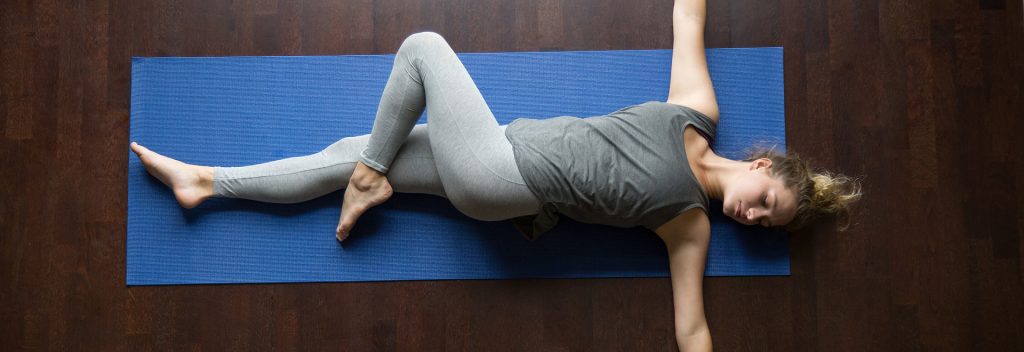
 Human movement involves all three planes: sagittal, frontal, and transverse. Joints, like elbows and knees, primarily flex and extend, while hips and shoulders move in all directions, including rotation. The spine, a series of interdependent joints, collectively moves in all three planes, with each region having unique movement capabilities. The lumbar region excels in flexion and extension but is limited in lateral flexion and rotation. The thoracic region is proficient in lateral flexion and rotation but less so in flexion and extension. The cervical area is flexible in all directions.
Rotational movement is crucial for everyday activities. Every step taken, whether walking or running involves rotation of the hips, spine and shoulders. One must rotate to get in and out of a car. Cervical (neck) rotation is necessary to check blind spots while driving. We rotate when we pick something up off a table from one side of our body and place it on a counter on the other side of our body. It’s essential for functional movement patterns. All sports incorporate rotation, but some, like golf, baseball, tennis, and hockey, require optimal rotational mobility and power. Torso rotation is vital for rotational power in sports.
Ground Force Reaction and Optimizing Rotational Training
Human movement is based on generating and leveraging energy from the ground. Through contractions of our muscles, we produce kinetic energy resulting in human movement. While ground reaction forces are necessary for human movement, understanding that all human movement is dependent upon rotation is important.
Lower Kinetic Chain – Closed Chain
When standing, the feet are grounded, closing the lower kinetic chain. This allows for proprioception, the body’s awareness of its position in space and ability to sense movement, action and location. A “real-life” example of proprioception is driving a car. We know where the accelerator and brake pedals are in relation to our feet and know how to move our feet back and forth between the two while applying the proper amount of pressure to drive safely. Without proprioception we would have to look at our feet and their positions relative to the pedals to be able to drive. The lower kinetic chain includes the toes, feet, ankles, lower legs, knees, upper legs, hips, pelvis, and spine.
Upper Kinetic Chain – Open Chain
Unlike the lower kinetic chain, the upper kinetic chain is open, as the hands and arms are not connected to a surface. This makes it harder for the brain to process proprioceptive signals. Locking the upper kinetic chain optimizes proprioceptive awareness. The upper kinetic chain consists of the spine, head, neck, shoulders, shoulder blades, arms, hands, and fingers.
Immobilizing the upper kinetic chain enhances thoracic isolation and rotation. This reduces the role of the upper extremities in spine movement, increasing core activation. The concept of locking the upper kinetic chain will permanently change how personal trainers approach ground force reaction rotational training.
Examples of rotational movement include twisting, turning, pushing, pulling, grabbing, throwing, kicking, punching, swinging, and striking. These movements require force production from the ground to be stabilized. Physical strength and movement rely on leveraging ground force into kinetic energy.
 Stabilizing Rotary Force Production
All rotational movement involves an axis of rotation and a lever arm. Understanding how to use the radii (lever arms) of the upper kinetic chain is key to optimizing rotational training. Newton’s 3rd Law states, “Every action has an equal and opposite reaction.” Maximizing rotational force requires stabilizing all kinetic chains, focusing on managing the axis of rotation.
The arms serve as the primary radii of the upper kinetic chain, with the spine acting as the axis of rotation. Maintaining spine angle is essential for rotational demands. Spine angle is counter-reactive to hip and pelvis position. Hips control spine position. Optimizing spine angle relies on hip and pelvis stabilization.
Maximizing movement during rotational movements depends on maintaining spine angle. Rotational training should focus on locking the upper kinetic chain and hip/core stabilization. Efficient movement, including rotation, depends on force production leveraged from the ground, which is Rotary Ground Force Training.
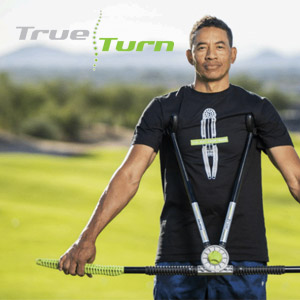
The TrueTurnPro is the first thoracic spine isolation and rotation device. It optimizes hip and spine rotation by locking the upper kinetic chain, enhancing proprioceptive awareness, and improving rotational training. It prevents arm involvement during spine movement, maximizing core activation and rotation. It stabilizes the axis of rotation during rotary force production. Locking the upper kinetic chain changes rotational training approaches.
Benefits of Locking the Upper Kinetic Chain:
- Isolates and Strengthens Trunk Rotation
- Enhances Core Activation
- Enhances and Strengthens Overall Hip Function
- Increases Body Awareness and Proprioception
- Stabilizes the Spine for Optimal Rotary Force Production
TrueTurnPro is the first exercise device that supports trainers and their clients as well as group exercise instructors and your members to perform torso rotation exercises properly. Using the TrueTurnPro in your facility is the most effective method available to improve thoracic spine range of motion, stability, strength and power. The three uses for the TrueTurn Pro are Rehabilitation, Prevention and Performance.
Increasing spinal rotation, stability, strength, and power has historically been difficult for personal trainers and group exercise instructors. Exercises commonly used for torso rotation include the use of stability balls, dowels, medicine balls, cable machines, and resistance bands. With the equipment listed above, clients often fail to understand instructions and how to isolate torso rotation. Clients and members commonly introduce lateral tilt (bend), body slide or sway, and movement at the shoulder (horizontal adduction and abduction at the glenohumeral joint) when performing torso rotation exercises. Even with proper demonstration by a personal trainer, provided with the best possible instruction, the faulty movement patterns of the client fail to be corrected. Until now, the available exercise options failed to offer a solution to clients and members that perform torso rotation exercises incorrectly.
Adding TrueTurnPro Programming in your Facility
The team at TrueTurnPro is excited to help you add and integrate the TrueTurnPro and our programs into your club(s). We currently offer two options for you and/or your staff. For your personal trainers we have developed a four-hour educational course that will provide your team with the foundational knowledge to integrate exercises using the TrueTurnPro with their clients. This course is available as an in-person workshop or as an online distance learning course. It is approved for four hours of continuing education credits. For your group exercise programming we have developed a group exercise class called The PureBack Method. The Pure Back Method consists of exercises and movement techniques drawn from therapeutic and corrective exercises with an artistic blend of ballet and Pilates. The goal of the class is to improve the overall function of the hip and back of health and fitness club members participating in a group exercise setting and address chronic back pain and discomfort. Group exercise instructors also earn continuing education credits upon completion of the course.
For an opportunity to experience TrueTurnPro firsthand, join me at SCW San Diego Mania Express, Thursday, Nov. 6 to Saturday, Nov. 8 at the San Diego Convention Center. Registration for the 3-day Fit Pro Convention with over 50 hands-on sessions, starts at $49. Click here for more information and to register. To add TrueTurnPro programming in your club, visit our website at www.trueturnpro.com or reach out to me personally via email or phone. johnp@trueturnpro.com, 602-999-4593.
 About the Author: John Preston, MS, CSCS
John Preston, MS, CSCS, is a fitness educator and industry advocate with 30+ years of experience. He earned an MS in Exercise and Wellness and a BS in Kinesiology with a specialization in Athletic Training from California State University, Long Beach. With 30,000+ client hours, he mentors future professionals and develops educational content for True Turn Pro, a rotational training device, shaping the next generation of trainers through leadership and innovation.
Yoga for Longevity: Go Beyond the Workout
By Lisa Greenbaum, E-RYT 500, C-IAYT
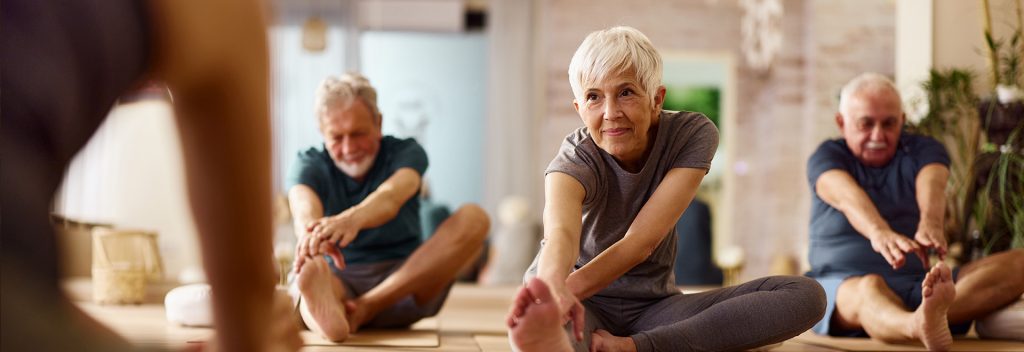
When we talk about longevity, we’re not just aiming to live longer—we’re striving to feel vibrant, strong, and grounded as the years go on. In the fitness world, we often chase this goal through strength, cardio, and stress management. But if we want to truly thrive, we need to go deeper.
 Enter Yoga.
This powerful practice doesn’t just build muscle or improve flexibility—it nurtures every layer of who we are. According to yogic philosophy, we’re made up of five layers or “koshas”: the physical body, energetic body, psycho-emotional body, wisdom-intellect body, and bliss body. Longevity comes when we nourish all of these.
Yoga helps us do just that.
Let’s start with the obvious: the physical body. Yoga poses (asana), movement, and nutrition help us stay strong and mobile. Then there’s the energetic body—an area getting more attention as recovery, sleep, and breathwork (pranayama) become central to performance and wellness. Deep breathing improves VO2 max, oxygenation, and overall energy. So far, so good—but there’s so much more.
What makes Yoga unique isn’t just what it does for our bodies—it’s how it transforms our inner world.
 Regular Yoga practice gently unearths emotions, patterns, and inner stories we didn’t even know were there. It strengthens the psycho-emotional body by helping us process stress, release trauma, and soften the emotional walls we often put up just to get through the day. When left unaddressed, this emotional baggage can become toxic—not just mentally, but physically. Yoga helps clear it.
And here’s the kicker: Yoga connects us to our wisdom body, the part of us that steps back from the chaos and sees clearly. With time, breath, and presence, we start responding instead of reacting, thinking with intention rather than impulse. And when all these layers align, we hit the jackpot—the bliss body. That deep sense of connection, contentment, and clarity? That’s the real fountain of youth.
But let’s be honest—how we practice Yoga matters.
 Modern Yoga has, in many cases, been filtered down into just another sweaty workout. But the true purpose of Yoga is to support the rest of your training—not replace it. If you’re lifting heavy or hitting intense Pilates classes, your Yoga should bring ease, mobility, and mental recovery—not become another thing you need to recover from.
That’s exactly why I created Yin+Restore, one of the signature classes at Sangha Yoga Collective. This gentle, flowing class is designed for everyone—regardless of age or fitness level—and focuses on breath, recovery, and fascia release. We also include vagal toning techniques to activate the parasympathetic nervous system, calm the mind, and build long-term stress resilience.
It’s not just a class. It’s the missing link in your longevity plan. Want to give it a try? Join us live or virtually every Thursday at 7 PM EST and try us for free with code SCW. www.sanghayogacollective.com
Looking for a more in-depth experience, join me at SCW San Diego Express Fit Pro Convention, Thursday, Nov. 6 to Saturday, Nov. 8 at the San Diego Convention Center. Registration starts at $49 for this 3-day, 50+ hands-on session event. Visit the website for information and to register. https://archive.scwfit.com/sandiego/
Longevity isn’t about surviving longer. It’s about living better, now. And Yoga, in all its depth, offers the roadmap to get there.
 About the Author: Lisa Greenbaum, E-RYT 500, C-IAYT
Lisa is the founder of Sangha Yoga Collective, a certified Trauma-Informed Yoga Therapist, E-RYT 500 Yoga Teacher, international presenter, and author. With over 20 years in the fitness and wellness industry, she has earned multiple honors, including Presenter of the Year. A Global Ambassador for WIFA and a Top 100 Health and Fitness Influencer in Canada (2017–2021), Lisa is committed to creating authentic, inspiring experiences.
The New Era of Fitness: Train Smarter, Recover Faster, Age Slower
By Dr. Grazyna Pajunen
Today’s clients want more than visible muscles — they want vitality, mobility, and longevity.
Modern fitness is shifting beyond reps and macros toward cellular rejuvenation — rebuilding the body from within.
Scientific advances now show that replenishing the body’s natural collagen, hyaluronic acid, and protein matrix can reverse visible and functional signs of aging.
Two innovations are leading this transformation: a multi-patented Collagen Matrix Technology and a clinically tested Sparkling Protein beverage that combine performance, science, and smart nutrition.
Together, they empower fitness professionals to deliver deeper, longer-lasting results — while creating an additional stream of income.
1 Patented Collagen Matrix Technology — Clinically Proven to Rebuild and Renew
This multi-patented Collagen/HA Matrix Technology delivers a bioavailable combination of collagen, hyaluronic acid, and chondroitin sulfate that mirrors the body’s own connective tissue.
Protected by seven U.S. and international patents and supported by multiple peer-reviewed clinical studies, this technology has been shown to:
- Rebuild cartilage and connective tissue, improving mobility and flexibility
- Increase skin hydration by up to 6,000% in 28 days
- Reduce wrinkles and dryness, restoring elasticity and tone
- Enhance post-workout recovery and comfort
- Activate natural “reverse-aging” pathways that restore youthful performance
This is not just supplementation — its regenerative nutrition designed for results you can feel and see.
2 Sparkling Protein — Clinically Tested, High-Protein, Zero-Sugar
The Sparkling Protein sets a new standard in recovery and lifestyle wellness.
Each can deliver 40 g of next-generation β-lactoglobulin (BLG) whey protein isolate, featuring an optimal leucine-rich amino profile for muscle repair, satiety, and energy — without sugar, grit, or heaviness.
Clinically tested at Biofortis Research, the formula demonstrated the ability to:
- Boost and sustain GLP-1, the satiety hormone that supports weight management
- Maintain elevated amino acid levels for hours, promoting lean muscle growth and recovery
Key Benefits
- 40 g complete whey protein (per 12 oz can) → supports lean muscle recovery and growth.
- 0 g sugar, ~160 calories → guilt-free, clean energy.
- Leucine-rich EAA/BCAA profile → triggers muscle protein synthesis + satiety.
- Supports GLP-1 satiety hormone → helps manage cravings and weight goals.
- Sparkling, refreshing taste → no grit, no blender, just pure enjoyment!
Perfect For:
- Post-workout recovery — quick grab-and-go
- Weight-management programs — protein-packed, sugar-free.
- Small-group training & challenges — drives results and compliance.
- On-the-go lifestyles — ready-to-drink anytime, anywhere.
Sparkling Protein is more than a drink — it’s the new standard in fitness recovery and lifestyle wellness.
3 Case Study: Kirk’s Reverse-Aging Comeback
Client: Kirk, competitive athlete from Canada
Goal: Regain strength and mobility after a severe shoulder injury
After a major injury, Kirk couldn’t lift even a jar of water. Doctors told him he’d never compete again. Determined to recover, he began a daily regimen using the patented Collagen Matrix Technology as part of a targeted wellness plan.
Over eight months, his results were extraordinary:
✅ Pain and inflammation subsided
✅ Mobility and stability returned
✅ Strength surged beyond his pre-injury level
He didn’t just return to the gym — he pressed 350 pounds and set a new world record in his age group.
“I didn’t just recover — I came back stronger. This helped me rebuild my body from the inside out.” — Kirk, Canada
Kirk’s comeback is just one of many success stories showing how this technology supports real regeneration and performance at every age.
4 The Reverse-Aging Advantage for Fitness Professionals
By integrating these clinically validated tools, professionals can:
- Offer patented, proven solutions that enhance recovery and rejuvenation
- Create a recurring income stream from client reorders and referrals
- Differentiate their brand with scientific credibility
- Deliver faster, longer-lasting results that boost client satisfaction
This is the next evolution of fitness — where science, performance, and profitability meet.
5 Real-World Transformations
Clients consistently report:
- Less joint stiffness and faster recovery
- Radiant, hydrated, more youthful skin
- Stronger mobility and stamina
- Higher energy, focus, and confidence
- A sense of vitality that radiates from within
When the body rebuilds itself cell by cell, aging slows — and strength returns.
Ready to Reverse Age — and Grow Your Business?
Join the professionals redefining fitness, longevity, and success.
👉 Book a Discovery Call with Dr. Grazyna Pajunen
Learn how to integrate this patented, clinically proven reverse-aging system into your programs and help clients look and feel 10 years younger — while expanding your income.
🔗 Book your call at meetgraz.com
During your call, you’ll:
- Learn how to implement these technologies with clients or studios
- Review partnership and commission structures
- Explore how to launch your own Reverse Aging from Within Program
✨ Rebuild. Rejuvenate. Reverse age — from the inside out.
 About the Author: Dr. Grazyna Pajunen
Dr. Grazyna Pajunen, a Warsaw native, holds a Ph.D. in Solid State Electronics and taught for 25 years at UCLA and FAU. With over 50 publications and 15 U.S. patents, she transitioned from electronics to health. Now a board-certified functional nutritionist, she partners with her health coach son in an anti-aging venture, helping clients age gracefully without medications or surgery—combining science and passion for transformative wellness.

Identifying Credible Sources of Nutrition Information: Expert Insights
By Dominique Adair, MS, RD
Identifying credible sources of evidence-based nutrition information for yourself or to share with clients can be a challenge, especially in the quickly evolving world of online influencers. The ability to separate fact from fiction is a vital tool for both you and your clients.
Dominique Adair, MS, RD, has spent her career helping people help people eat better. A certified fitness professional, a Clinical Lipid Specialist, a Registered Dietitian, and ACE Scientific Advisory Panel member, Dominique is the Head of Clinical Quality, leading a team of 300 Registered Dietitians at Nourish (www.usenourish.com), a tech-leveraged, telehealth company that matches patients and clients with RDs.
Here, Dominique answers our questions and offers some strategies for finding trustworthy content, identifying voices you can trust and knowing what makes a source credible.
When reading an article or blog, how can you tell whether the information presented is trustworthy and evidence-based? Are there strategies you can share that will help health and exercise pros and their clients identify good content?
 One helpful question to ask to separate fact from fiction is: From where/whom did the info come? If the organization is a national (or international), credible organization, that’s a start. A really good filter to put something through is: “Will someone profit from a sale based on the info provided?” For example, the American Heart Association, American Cancer Society and American Council on Exercise all dispense evidence-based nutrition information, but they are not promoting anything in the content that could provide them with revenue. These organizations, and others, are essentially dispensing evidence-based education. However, a supplement company or a food company might dispense content that promotes the purchase of their products. That doesn’t necessarily mean that the information is not scientifically based, but the exercise pro needs to be much more circumspect with content that promotes a sale.
The second part is the “who.” Just like you wouldn’t go to a celebrity who isn’t a surgeon for a meniscus repair, you shouldn’t go to a celebrity for nutrition council or information. The professional you should turn to for information on nutrition, diet and performance, and diet and disease is the registered dietitian (RD). An RD is a credentialed healthcare professional who applies evidence-based information about nutrition and diet to contribute to the health and wellness of individuals, groups and communities. The RD has a minimum of a graduate degree from an accredited dietetics program and has completed a supervised practice requirement, passed a national exam and completes continued professional development throughout their career.
Similarly, in the world of social media and influencers, how can pros know when to believe what they’re seeing?
This is related to what is shared above. A lot of what we see on social media are testimonials. But what people may not know is that behind the scenes these people are often paid, in dollars or products, to say good things about the product or program. Back to the surgeon example: You wouldn’t let an influencer take out your appendix because they have a million followers. Health and exercise pros should use the same discretion when seeking (and passing along to their clients) nutrition advice and information.
How can pros discuss this topic with their clients, who may be expecting extreme or rapid results or be using potentially dangerous practices as part of their nutrition or exercise regimens?
I think it is very common to want results yesterday, so health and exercise professionals are already great at having these conversations and setting expectations. When it comes to the world of nutrition, it’s no different. Explaining that sustainable behavior modification is what will produce long-term wins is essentially the same conversation. That said, we also know it’s important to meet clients where they are. That doesn’t mean agreeing to a five-week, 50-pound weight-loss goal or a five-week 10-pounds-of-muscle-gain goal. But, it does mean we can use coaching skills like motivational interviewing to express empathy and support clients’ self-efficacy. You might say something along the lines of, “It sounds like you’re really ready to make some changes. That’s terrific. Let’s make sure we focus on things that will produce long-term goal achievement, so you get the most bang out of your effort.” Co-developing SMART goals with the client can go a long way toward talking through those unrealistic expectations and swapping them for goals that still feel exciting and motivating to the client.
Are there sources you frequently use when looking for evidence-based content? For example, are there websites or social media accounts you can share with our readers?
In most cases, credible websites end in .gov, .edu or .org. This does not mean that websites ending in .com or .net can’t be trusted, but they should be carefully reviewed based on the filters I detailed above. Here are a few examples of trustworthy sources of nutrition information:
- Centers for Disease Control and Prevention
- U.S. Department of Agriculture
- MyPlate
- Academy of Nutrition and Dietetics
- American Heart Association
- American Diabetes Association
- Harvard’s Nutrition Source
- American Council on Exercise
 In addition, I’d encourage health and exercise professionals to get their hands on the original research. For example, if you see a study mentioned in the popular press or on social media, go to PubMed to see if you can find the actual journal article that is mentioned. PubMed is a free resource supporting the search and retrieval of biomedical and life sciences literature with the aim of improving health—both globally and personally. Citations in PubMed primarily stem from the biomedicine and health fields, and related disciplines such as life sciences, behavioral sciences, chemical sciences and bioengineering. If you type the title of the paper, or even just a subject area (e.g., role of physical activity in weight loss and weight maintenance) and then type in “scholarly,” the search engine should pull mostly papers from PubMed. From there, you can pursue the entire paper.
Finally, it can sometimes be challenging to put evidence-based information into practice. Do you have any suggestions for exercise pros who want to translate dietary guidelines or other evidence-based content into actionable steps for their clients?
It is hard! I have built teams of clinicians nationally for decades, who have taken care of tens of thousands of people, and the counselors who do this best “help with the how.”
Psychologists refer to the intention–action gap, which is a fancy way of saying, “Why don’t I do what I say I’m going to do?” And the reason is simple and complex… Behavior change is very hard. When a health or exercise professional reads a paper, or learns of a guideline, they should think of ways they can help that client with the how. For example, we know that according to the Dietary Guidelines for Americans, adults should eat 1.5 to 2 cup-equivalents of fruits and 2 to 3 cup-equivalents of vegetables daily. But rather than making that the goal, keep asking how.
It might sound like this:
Professional: You know the Guidelines recommend 2 to 3 cups of veggies a day. That’s for disease prevention and heathy weight achievement, which are two things you said were important to you.
Client: Okay, I am going to eat more fruits and vegetables.
Professional: Great. How are you going to do this?
Client: Well, first I have to get these foods in my house.
Professional: I see. How are you going to do that?
Client: Well my weekdays are really busy, but I could make Saturday or Sunday a shopping day.
Professional: Your weekends also seem pretty full, so how are you going to make time on the weekends?
Client: I am going to ask my spouse to watch the kids while I go to the gym on Saturday. On the way home, I’ll stop at the grocery store. Maybe I can find a recipe with the produce items that we can all make together.
In that exchange, the pro has taken the very high-level Guidelines and made them possible for someone to implement. They’ve helped with the how without overstepping their scope of practice.
Special thanks to ACE Fitness for publishing this article. You can view the original post here: Identifying Credible Sources of Nutrition Information: Expert Insights
 About the Author: Dominique Adair, MS, RD
Health and Fitness Expert
Dominique Adair, MS, RD, is a private-practice nutrition and fitness advisor, public speaker, educator, media consultant, and freelance health and nutrition writer. Since 1990, she has helped guide hundreds of clients through in-person and digital counseling and has established herself as an internationally recognized speaker on nutrition, metabolism and fitness. Additionally, Adair has worked extensively with the entertainment industry as well as collegiate and professional athletes, specializing in evidenced-based performance nutrition without compromising optimal health. Adair is a member of ACE’s Scientific Advisory Panel and serves as an advisor and on-air commentator to electronic and print media including the traditional commercial broadcast television networks, as well as CNBC, CNN and others. An avid hiker, cyclist and fitness enthusiast, she lives with her son in New York.

Wickedly Wholesome Halloween Treats
Pumpkin season is in full swing, and we couldn’t resist adding a spooky twist to this month’s recipes! These wickedly wholesome creations are festive, flavorful, and frightfully easy to make—perfect for last-minute gatherings or cozy nights in. Try them out, snap some pics, and share your favorite Halloween dishes with SCW on our social media. We can’t wait to see your hauntingly healthy creations! 👻
🎃 Jack-O’-Lantern Stuffed Peppers
Serves: 4
Prep time: 20 min | Cook time: 25 min
 Ingredients
- 4 large orange bell peppers
- 1 cup cooked quinoa (or brown rice)
- 1 can (15 oz) black beans, drained & rinsed
- 1 cup corn kernels (fresh, frozen, or canned)
- ½ cup diced onion
- 1 cup salsa (medium or mild)
- 1 tsp chili powder
- ½ tsp cumin
- Salt & pepper to taste
- Olive oil spray
- Optional toppings: avocado slices, cilantro, or Greek yogurt
Instructions
- Preheat oven to 375°F (190°C).
- Slice the tops off the bell peppers and remove seeds and membranes.
- Using a small paring knife, carve jack-o’-lantern faces into each pepper.
- In a skillet, sauté onion in a bit of olive oil until translucent (3–4 minutes).
- Stir in quinoa, black beans, corn, salsa, and spices; heat through.
- Stuff each pepper with the filling, place in a baking dish, and replace the tops.
- Bake uncovered for 25 minutes, until peppers are tender but hold shape.
- Serve warm with avocado or a dollop of Greek yogurt.
🕸️ Pumpkin Hummus
Serves: 6
Prep time: 10 min | No cook
 Ingredients
- 1 can (15 oz) chickpeas, drained & rinsed
- 1 cup pumpkin purée (not pumpkin pie mix)
- 2 tbsp tahini
- 2 tbsp olive oil
- 2 cloves garlic
- Juice of 1 lemon
- ½ tsp ground cumin
- ½ tsp smoked paprika (optional)
- Salt & pepper to taste
- Water as needed for texture
Instructions
- Combine all ingredients in a food processor.
- Blend until smooth, adding water 1 tablespoon at a time for desired consistency.
- Adjust seasoning to taste.
- Spoon into a serving bowl (or hollowed mini pumpkin for fun!).
- Drizzle with olive oil and sprinkle with paprika or toasted pumpkin seeds.
Serve with raw veggies or whole-grain pita chips.

 We’re always looking for great content highlighting the newest things in the world of fitness. Please submit your article directly to editor@scwfit.com for immediate consideration!