

The Essential Science Behind Safe & Effective Warm-Ups for Active Agers
By Sara Kooperman, JD
As adults age, maintaining mobility, strength, and function becomes increasingly essential—not just for fitness, but for preserving independence, preventing injury, and supporting the active lifestyles so many older adults enjoy. Whether they participate in golf, pickleball, gardening, aquatic exercise, or group fitness classes, their warm-up routine can determine whether they move comfortably and confidently… or experience pain, stiffness, and avoidable injury.
 Understanding the physiology of aging joints and muscles allows fitness professionals to create warm-ups that prepare the body safely and improve performance. This article explains why specific warm-up elements matter—especially for hands, wrists, shoulders, ankles, and hips—and outlines practical strategies to help older adults move better and reduce injury risk.
Why Warm-Ups Must Be Different for Older Adults
Warm-ups do more than “loosen up” the body. They stimulate circulation, improve neuromuscular recruitment, activate stabilizing muscles, and prepare joints to move through their full, healthy range of motion.
But with aging, several physiological changes occur:
- Muscle fibers and motor units decrease
- Joint cartilage thins
- Synovial fluid production slows, making joints feel stiff
- Reaction time and coordination decline
- Balance becomes more challenging
- Tendons and ligaments lose elasticity, increasing injury risk
For these reasons, older adults benefit from warm-ups that are slower, more intentional, and more joint-focused than those designed for younger populations.
Why Hand and Wrist Preparation Matters
Hands and wrists are often overlooked, but for older adults they are foundational to safe movement. Arthritis is extremely common, and gripping objects—weights, sticks, paddles, or flotation equipment—can cause pain if joints are not prepared.
Hand, wrist, and forearm warm-ups help:
- Increase synovial fluid circulation
- Improve mobility in the small joints
- Prime the neuromuscular system for gripping and stabilizing
- Reduce compensatory movements that lead to elbow and shoulder strain
- When the wrist and shoulder joints are stiff, the elbow is forced to “twist” beyond its natural hinge function—leading to irritation and injury.
This is especially important because wrists and shoulders are synovial joints capable of multi-directional movement. (The wrist is actually a condyloid joint with flexion/extension + radial/ulnar deviation; the shoulder is a full ball-and-socket joint.)
Elbows are hinge joints, not designed to rotate significantly. Forced rotation = injury.
Effective Warm-Up Movements:
- Open and close hands
- Wrist circles
- Gentle wrist flexion/extension
- Elbow mobility
- Shoulder rolls + arm circles
These movements are crucial for safe participation in programs requiring gripping—especially for older adults who love pickleball, tennis, weight training, or aqua equipment.
Shoulder Warm-Up: Protecting One of the Most Vulnerable Joints
The shoulder joint is one of the most mobile but also one of the least stable joints in the body. Aging adults are more susceptible to:
- Rotator cuff irritation
- Impingement
- Limited overhead mobility
- Decreased strength in stabilizing muscles
Warm-ups must include:
- Scapular mobility
- Rotator cuff activation
- Gentle overhead range of motion
- Postural alignment
Preparing the upper body is essential not only for safe exercise, but also for daily tasks:
- Lifting groceries
- Reaching overhead
- Carrying objects
- Household chores
- Recreational sports (golf, pickleball, swimming)
Warm-ups help restore movement patterns that become restricted with age and inactivity.
Lower Body Warm-Up: Hips, Ankles & the Shuffling Problem
Hip & Ankle Mobility: The Foundation of Safe Walking
Like the shoulder, the hip is a ball-and-socket joint designed for multi-directional movement—flexion, extension, rotation, abduction, and adduction. However, with age:
- Hip mobility decreases
- Stability muscles (glutes, deep hip rotators) weaken
- Posture shifts, creating stress on knees and lower back
- Ankles—hinge joints with small rotational capacity—also stiffen, reducing balance and gait efficiency.
Warm-up goals:
- Increase ankle dorsiflexion
- Improve hip rotation
- Prepare the knees by moving joints above and below them
Why Aging Adults Shuffle — and Why It Must Be Addressed
As adults age, research shows they lose motor units—the nerve + muscle fiber connections responsible for strength and coordination. This especially affects the:
- Anterior tibialis (shin muscle)
- Intrinsic foot muscles
- When these weaken, the calf muscle (gastrocnemius-soleus complex) takes over, creating a plantar flexion dominance (pointing the toes).
This causes:
- Toe drag
- Shuffling
- Trips and falls
- Difficulty walking with a proper heel-to-toe pattern
Corrective Strategy: Dorsiflexion
Teaching participants to lift the toes (dorsiflex) activates the shin and restores safer gait mechanics.
Warm-up drills can include:
- Heel lifts + toe lifts
- Marching with dorsiflexion
- Ankle circles
- Slow stepping patterns focusing on foot clearance
How These Warm-Ups Support Strength, Cardio & Aquatic Workouts
Whether the workout is land-based or aquatic, upper body and lower body warm-up routines improve safety and performance.
For aquatic exercise:
- Hands and wrists must grip flotation devices securely
- Shoulder mobility prevents overuse tension during sculling
- Hips and ankles allow effective travel, balance, and suspended posture
- Dorsiflexion prevents foot dragging along pool surfaces

For strength training:
- Wrist mobility prevents strain during holding weights
- Shoulder warm-ups protect the rotator cuff
- Hip mobility improves squat depth
- Ankle mobility improves balance and stability
For daily life tasks:
- Opening jars
- Picking up grandchildren
- Getting in/out of cars
- Walking safely
- Playing recreational sports
- Carrying shopping bags
- Warm-ups truly translate into better function and independence.
A Physiology-Based Warm-Up Sequence for Active Agers
1. Hands & Wrists (1–2 minutes)
- Finger flexion/extension
- Wrist circles
- Wrist waves
- Gentle gripping and releasing
2. Shoulders & Upper Body (2–3 minutes)
- Shoulder rolls
- Arm circles
- Scapular retraction
- Overhead range-of-motion
3. Hips & Ankles (2–3 minutes)
- Marching with dorsiflexion
- Hip circles
- Knee lifts
- Ankle circles
4. Gentle Whole-Body Movement (2 minutes)
- Side stepping
- Slow gait rhythm
- Light travel patterns
- This sequence prepares every major joint and movement pathway older adults need for safe exercise.
Conclusion
A warm-up tailored to older adults is not optional—it’s essential. Understanding how joints function, what changes with age, and how to activate the right muscles can dramatically reduce injuries and enhance movement confidence. When instructors prioritize proper warm-ups for the hands, wrists, shoulders, hips, and ankles, they empower older adults to participate fully in fitness activities and daily life with improved strength, balance, and resilience.
Supporting active agers means giving them the tools to stay mobile, independent, and vibrant—warm-ups are the first step toward that goal.
 About the Author: Sara Kooperman
Sara Kooperman, JD, CEO of SCW Fitness Education, WATERinMOTION®, and S.E.A.T. Fitness, Founder of the MANIA® Convention, sits on the canfitpro Advisory Panel and the Gold’s Gym Think Tank and was a founding board member for the Women In Fitness Association (WIFA). Recently nominated for the IDEA Fitness Leader of the Year Award, Kooperman won the Most Innovating Fitness Pro by FIT-C (Fitness Industry Technology Council). Sara is the best-selling author of FIT FOR BUSINESS, an inductee into the National Fitness Hall of Fame, an Illinois State Businesswoman of the Year, esteemed panelist for multiple Webinars & Podcasts, and sits on the ACSM Communication & Public Information Committee.
Your Reformer Makes Hybrid a Competitive Edge
By Your Reformer
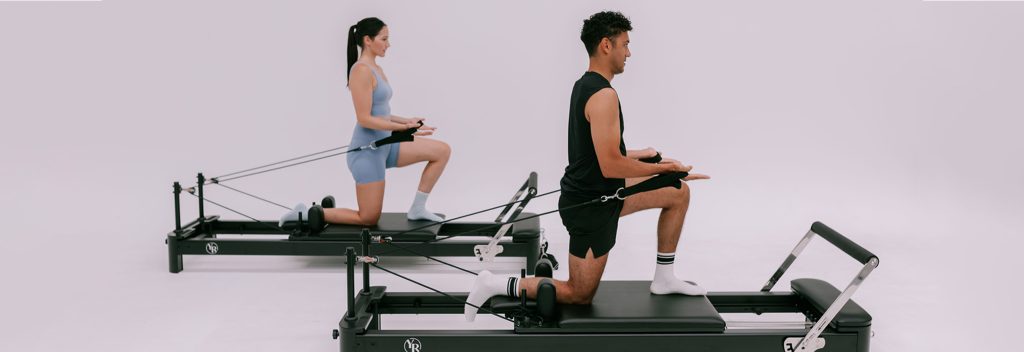
With demand for Pilates soaring, reformers are no longer “extra,” they’re essential. Smart design and hybrid delivery are making them the cornerstone of future clubs.
Pilates is booming. Members are asking for it, wellness trends are fueling it and clubs that offer it are seeing stronger retention. Yet for operators, reformers can be tricky — bulky equipment, limited class spots and the question of how to optimize programming. That tension has made reformer Pilates both one of the most exciting and one of the most complex growth opportunities in fitness today.
 For Ben and Emma Stallworthy, co-founders of Your Reformer and former gym owners, these dynamics aren’t abstract trends. They are lived experiences that shaped their company. The couple grew Pinnacle Health Club in Australia from just 420 members to more than 7,500 across six locations before selling the chain in 2021, a journey that gave them first-hand insight into what drives sustainable growth in modern fitness.
“In 2016 we saw a boom in low-cost, high-volume operators,” says Stallworthy. “We had to make a decision — drop prices and compete or go in a different direction. We chose to incorporate wellness studios with reformer Pilates and mat Pilates, and the results were incredible. Membership revenue went through the roof, and we attracted both new members and higher-value tiers.”
That pivot informed the DNA of Your Reformer: an operator-first brand designed to help clubs grow yield, attract new members and maximize retention.
Hybrid Models as the New Normal
The ability to offer both instructor-led and self-guided experiences is becoming a defining feature of fitness facilities today. Your Reformer has been at the forefront of this movement, with solutions like KioskPro and ClassPro enabling members to engage with Pilates whenever they want.
“Making all fitness modalities more accessible is the key,” Stallworthy explains. “If members can access what they want, when they want, it improves retention. Our solutions are built around that philosophy.”
As more members seek out Pilates for its blend of strength, flexibility and recovery, reformers are becoming a cornerstone of fitness facilities. For the Stallworthys, the opportunity lies in turning that demand into lasting impact and a strategic driver of growth.
“When I put my club hat on, the first question is: is this a cost, or is this an investment?” says Stallworthy. “If it’s just equipment, it’s a cost. But if it brings in more members, improves yield and drives retention, then it’s an easy decision. That’s how we think about every solution.”
This perspective helps explain why Your Reformer has become the fastest-growing reformer brand globally, now supporting gyms in 38 countries.
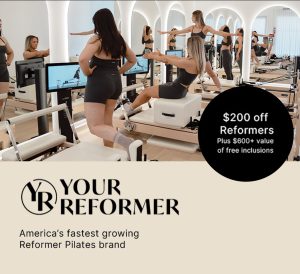 Designing for Space and Scale
Another challenge the Stallworthy’s faced first-hand — as so many operators do — is ensuring every inch of space added value and ROI. Your Reformer was designed with that in mind. The reformers are slightly slimmer in width, allowing clubs to fit more units per studio — sometimes two additional reformers in the same footprint. They also feature stackable and storable designs, making it easier for operators to adapt multipurpose spaces.
“We could never fit enough participants into our classes because of the demand in our clubs,” Stallworthy recalls. “So, we designed the equipment to save three to five inches per unit, which really adds up.”
Coupled with digital offerings that extend utilization beyond peak hours, Your Reformer helps operators squeeze more value out of every square foot.
Expansion hasn’t been without challenges, but the company has invested in solving them. Logistics are critical — ensuring safe delivery in every market — but so is localization. Content is already being translated into German, French and Spanish, with more languages on the way.
The U.S. has become a major focus, with delivery hubs, company-employed installation teams and showrooms in Los Angeles, New York and soon Dallas. “We’re all in on the U.S.,” says Stallworthy. “We want to be present and supportive for operators here.”
 Your Reformer’s commitment extends past delivery. Operators receive onboarding strategies, marketing kits and even customizable digital experiences, such as allowing clubs to upload their own instructor videos into the kiosk system. Constant reinvestment in new content, weekly class additions and challenges keep members engaged and clubs energized.
“For us, it’s about being all-in with our partners,” Stallworthy says. “We know what it’s like to be on the other side, so our goal is to deliver everything a club needs to succeed.”
As hybrid models become mainstream and space optimization grows more urgent, the role of reformer Pilates in fitness centers is only going to expand. “In my opinion, in the next few years, it won’t be a question of whether you have reformer Pilates,” Stallworthy predicts, “It will be, ‘What’s your reformer Pilates strategy?’”

Redefining Success Beyond Intensity
By Jessica H. Maurer
The fitness industry is known for its energy, passion, and impact. It’s also known for burnout. Long hours, physical demand, emotional labor, and the pressure to constantly do more can shorten careers that start with deep purpose. Yet some professionals don’t just survive decades in fitness. They evolve, expand, and thrive.
Career longevity isn’t accidental. It’s intentional. And it requires a shift from chasing intensity to building sustainability.
Leslee Bender, Mindy Mylrea, and Jessica H. Maurer each represent different chapters of that evolution. Together, their experiences tell a clear story: lasting success in fitness comes from learning when to push, when to pivot, and when to widen the lens beyond workouts.
 From Proving Yourself to Protecting Yourself
Early in a fitness career, the drive is often about proving credibility. Teaching more classes. Taking on every opportunity. Saying yes before understanding the cost. Over time, that mindset can quietly erode the body and the joy that drew people to fitness in the first place.
Leslee Bender learned that longevity required refinement rather than escalation. Her work with the Bender Ball emerged from listening more closely to the body and respecting how it responds to intelligent, precise movement. Her approach not only preserves the body but also enhances awareness, focus, and confidence in movement—benefits that ripple out to every client she trains.
Leslee shares, “Longevity comes from learning how to work with your body, not constantly pushing against it. Understanding your limits and respecting them is not weakness—it’s smart training that allows you to last in your practice for decades.”
By shifting toward smaller tools, deeper awareness, and smarter biomechanics, she created a method that supports strength, control, and sustainability. Her approach reflects a truth many professionals discover mid-career: what worked early on may not support you long term, and evolution is not a weakness. It’s a strategy.
Redefining What Fitness Really Means
Mindy Mylrea’s career spans decades, trends, and continents. When asked what’s next for the fitness industry, her answer is immediate and unwavering. Wellness isn’t coming. It’s already here.
For Mindy, longevity came from expanding fitness beyond movement alone. Her classes integrate education, social connection, stress management, and purpose alongside physical training. She brings articles, research, conversation, and reflection into the room, creating a full-spectrum experience.
“We are an ecosystem. It’s not just fitness. It’s mental wellness, physical wellness, connection, sleep, and stress. You have to treat the whole person. Wellness is about balance. It’s about helping people feel good in their bodies, their minds, and their lives, not just counting reps or calories,” Mindy says.
She also recognizes the limits of doing it all. True sustainability means collaboration. Referring out. Building teams. Creating environments where clients receive comprehensive care without instructors carrying the entire load themselves.
As gyms evolve to include wellness spaces, meditation rooms, and interdisciplinary support, Mindy sees the industry aligning with what seasoned professionals have practiced for years.
Boundaries, Systems, and the Business of Staying Power
Jessica H. Maurer approaches longevity through a different but equally critical lens: structure. Through years of consulting and leadership, she’s seen countless talented professionals burn out not from lack of passion, but from lack of systems.
“Most fitness professionals don’t burn out because they don’t love the work. They burn out because they don’t have the structure to support it. I’ve seen trainers completely burn out because they didn’t have a framework to organize their week, their clients, and their content. If your passion is fading, it’s usually because your habits and environment aren’t set up to support longevity in the work you love,” shares Jessica.
Longevity requires more than motivation. It requires boundaries, repeatable processes, and clarity around what success actually looks like. Jessica emphasizes managing energy rather than just time and designing businesses that support life instead of consuming it. By creating structures that manage both workload and energy, fitness professionals can protect their mental wellness while continuing to deliver high-quality experiences.
She also champions mental wellbeing as a foundational skill, not a trend. Fitness professionals are natural helpers, but without tools for stress regulation, emotional resilience, and clear expectations, even the most dedicated leaders can exit the industry too soon.
 Evolution Over Exhaustion
Across all three perspectives, the message is clear. Longevity doesn’t come from doing more. It comes from doing differently.
It means trading constant intensity for intelligent progression. Expanding fitness into wellness. Building community instead of isolation. Creating systems instead of chaos. Honoring the body, the mind, and the business equally.
The most respected leaders in fitness didn’t last because they pushed the hardest. They lasted because they listened, adapted, and redefined what success looked like at every stage.
Leslee, Mindy, and Jessica are also the creative forces behind The Move Mentors, a platform designed to help fitness professionals evolve their skills with micro-learnings, actionable strategies, and affordable access to expert guidance. Their combined experience ensures that whether someone is early in their career or decades in, they can grow sustainably, adapt intentionally, and thrive without the overwhelm.
That is the future of fitness. And it’s already unfolding.
 About the Author: Jessica H. Maurer
Jessica H. Maurer is a recognized wellness business consultant, strategist, and keynote speaker dedicated to helping professionals overcome burnout and cultivate mental wellness. Through international presentations, workshops, and consultations, she empowers individuals and organizations to move from overwhelm to clarity, resilience, and sustainable success.
Your Year of Learning Starts Here: SCW Fitness 2026
Need CECs or CEUs? SCW Fitness has you covered! Whether you’re working with a tight budget, limited vacation time, or a packed schedule, SCW offers both virtual and in-person education packed with the latest research, movement, and choreography for fitness professionals.
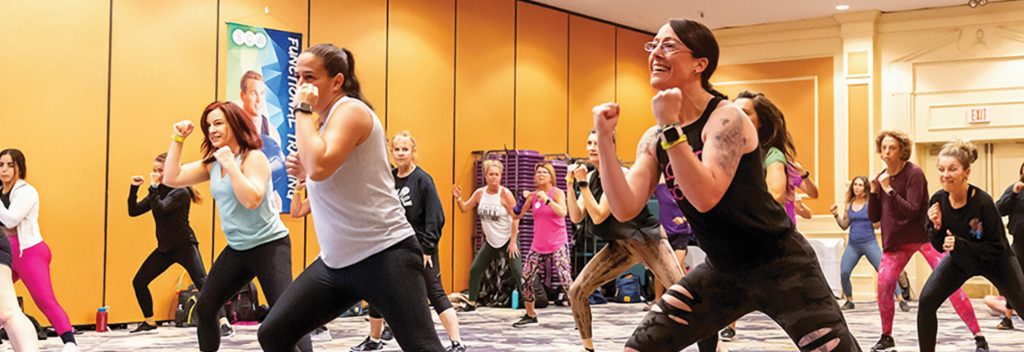
 We kick off 2026 live and in person at DC MANIA®, February 26–March 1, at the Hyatt Regency Dulles in Herndon, VA. This extremely popular three-day Fit Pro Convention features 200+ sessions and workshops, dynamic networking, social events, and a wide variety of exhibitors. It’s your chance to learn, connect, and take your fitness career to the next level.
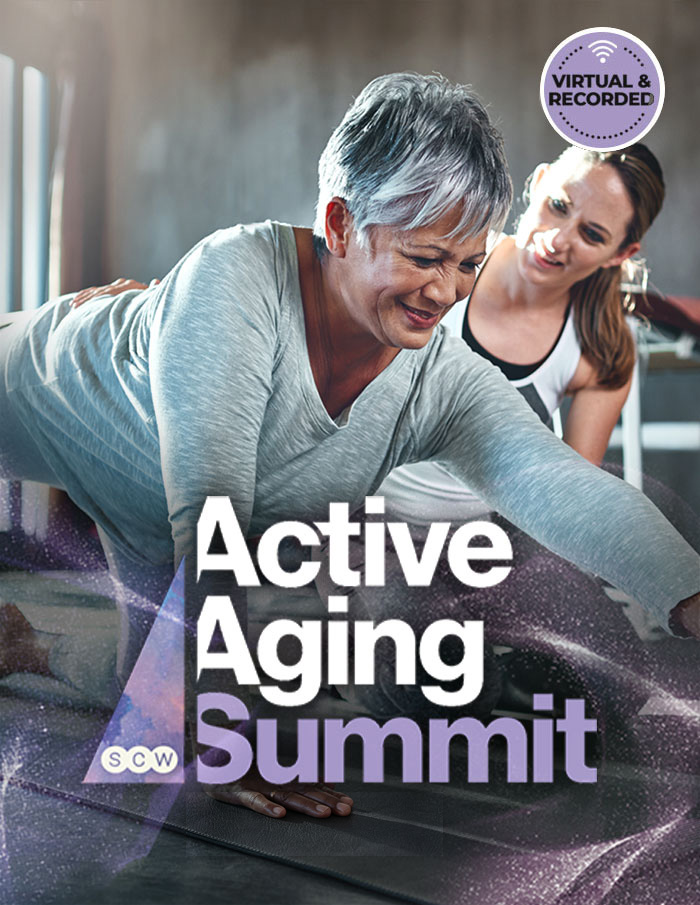
Work with the 55+ population? SCW has specialized education just for you. Join us for the Active Aging Summit, March 21–22, live on Zoom. This two-day virtual event offers 80+ activity and lecture sessions and up to 15 CECs/CEUs from NASM, NFPT, ACSM, ACE, AFAA, AEA, SCW, and more. Explore cutting-edge research on longevity, exercise, nutrition, brain health, and overall wellness—all designed to elevate both your professional expertise and personal well-being.
Looking to deepen your nutrition knowledge? The Nutrition Coaching Summit, May 16–17, delivers 36 virtual sessions focused on food choices, coaching strategies, sleep, and total wellness. Keep an eye on your inbox for registration details.
Need even more credits? No problem. Choose Live Stream MANIA®, April 18–19, or join us in person at Florida MANIA®, May 29–31, at the Caribe Royale Orlando. Learn alongside hundreds of fitness professionals in hands-on workshops and expert-led training—either from home or on-site in sunny Florida.
 Round out an incredible year with even more events, including the Aqua Exercise Summit (June 13–14), Atlanta MANIA® (July 31–August 2), Dallas MANIA® (August 28–30), Midwest MANIA® (October 2–4), and Boston MANIA® (November 13–15). Mark your calendars.
Prefer to earn credit on your own schedule? Every SCW event offers the option to purchase recordings, so you can learn anytime, anywhere. Just look for the “Recordings Only” option when registering.
From the SCW Team to yours, we’re here to help you stay inspired, educated, and ahead of the competition. SCW Fitness—The World’s Leader in Health & Fitness Continuing Education.
We can’t wait to see you at an event in 2026!

Why You Need a Training Plan— Not Periodization
By Nick Tumminello
If you’re a personal trainer, you’ve probably heard countless times that you should “periodize” your clients’ training programs. The idea is that by organizing training into cycles — often called macrocycles, mesocycles and microcycles — you’ll ensure peak performance and reduce risk of overtraining. That’s sports science dogma dressed up like it’s universally applicable. It’s not.
 Here’s the reality: Most personal training clients don’t need classic periodization.
That doesn’t mean they should just “wing it” every workout. Far from it. What your clients need is a clear, well-thought-out training plan that’s simple to follow, easy to adjust and aligned with their goals and abilities.
I’m about to show you how to create simple and effective program for busy adults who want to lose fat, build muscle, move better and feel healthier, without getting bogged down with traditional periodization models.
3 Reasons Traditional Periodization Doesn’t Work for Most Clients
Traditional periodization was developed for high-performance athletes training for a specific competition date. The goal is to peak at exactly the right time. Your client has a 9-to-5 job, not the Olympic Games.
Most personal training clients aren’t competing in anything. They:
• Want to lose fat
• Want to get stronger and healthier
• Want to feel and move better
• Train 2–3 days per week
• Have busy, unpredictable lives
Ask yourself:
• Does my client care about peaking their performance in 12 weeks?
• Are they training 5–6 days a week with tightly managed stress and recovery?
• Will they even be consistent for 6 weeks, much less 6 months?
If the answer is “no,” which it is usually is, then trying to use classic periodization often causes more problems than it solves. Here are three reasons why:
1. It’s Too Complex for Their Needs
Macrocycles, mesocycles, and microcycles sound impressive, but they’re mostly irrelevant to someone who just wants to be fitter next month than they are today. By the way, it’s much simpler and straight-forward to refer to these periods as training weeks, training phases and training blocks.
2. It’s Too Rigid for Real Life
Classic periodization involves dividing longer training periods of time into shorter periods of time, where one period of training builds upon the previous period and prepares for the next period of training. Thus, this type of periodization assumes your client will train consistently, recover well and follow the plan exactly. But what happens when:
• They get sick for a week?
• They travel for work?
• They suddenly need to train less often?
One missed week can throw off the whole carefully plotted cycle.
3. It’s Often Built on the Wrong Goal
Most periodization models are built to improve a single performance metric (max strength, speed, endurance) at a specific point in time. Personal training clients usually want general, year-round fitness, not a one-time peak.
The Better Approach: Progressive, Flexible Programming
Training without a plan is like getting in your car and driving with no destination, which is unfortunately what many trainers do.
Sure, you might end up somewhere decent by accident, but you’re more likely to waste a lot of gas and time.
Your clients are paying for results. That means delivering a program with logical structure, not a grab bag of random workouts that just make them tired.
Instead of a rigid periodization model, personal trainers should use a progressive but flexible training plan.
The key difference is this:
• Periodization → Detailed cycles built months ahead, aiming for a specific peak.
• Progressive Planning → General plan focused on steady improvement, easily adjusted as needed.
This works better for personal training clients because it:
• Allows you to adapt to life changes without derailing the plan.
• Focuses on consistent progress, not peaking.
How to Build a No-Periodization Training Plan That Works
Here’s a step-by-step framework you can immediately use to help your clients continually get stronger, leaner and more athletic — without needing a Ph.D. in exercise science or color-coded macrocycles.
Step 1. Start with the Client’s Training Profile
Ask:
• What’s their primary goal? (e.g., fat loss, general strength, muscle gain, mobility)
• How many days can they realistically train?
• What equipment do they have access to?
• Any injuries or limitations?
Example:
• Goal: Lose fat, improve functional strength.
• Availability: 2 days/week in the gym, 1 at home.
• Limitation: Mild knee pain.
Step 2. Choose the Right Training Split
For most clients:
• Training 2 to 3 times per week = Full-body workouts
• Training 4 times per week = Upper/lower split
Full-body sessions are efficient, easy to adjust and ensure no movement pattern or muscle group gets neglected if a session is missed.
Step 3. Pick the Big Rocks (Movement Patterns)
Forget chasing random exercises — start with movement categories:
• Knee bend (squat, lunge)
• Hip Hinge (RDL, hip thrust)
• Push (horizontal or vertical/diagonal)
• Pull (horizontal or vertical/diagonal)
• Rotation (dynamic or anti-rotation)
Step 4. Apply Simple, Ongoing Progression
Progress doesn’t require fancy periodization — just a method for making things harder over time:
• Add weight
• Add reps
• Add sets
• Increase tempo difficulty
For example, if your client does goblet squats with 40 lbs for 3 sets × 10 reps on week one. On the next week they might do 3×11, then 3×12. Then increase the weight to 45 lbs and repeat the set and rep cycle starting at 3×10.
5. Rotate Exercises
Clients need variety to avoid boredom and plateaus — but too much variety stops progress.
• Keep core lifts for 4–6 weeks to ensure progress
• Change accessory exercises often to keep things fresh and interesting
Example: After 4 to 6 weeks, swap goblet squats for split squats, or TRX rows for cable one-arm rows.
Step 6. Plan Recovery Weeks as Needed
Most clients don’t need planned “deload” weeks because they’re only training 2 to 3 times per week.
So, instead of scheduled “deloads” every few weeks like in periodization, simply back off when needed:
• Client feels run down.
• Strength numbers stall for 2–3 weeks.
• Life stress is high.
This could mean reducing sets/reps for a week or replacing heavy lifting with lighter, mobility-focused sessions when your client has low energy, didn’t sleep well, etc.
 Real World Periodization
Classic periodization is a valuable tool — for the right person, at the right time. That person is usually a competitive athlete, not your average personal training client.
Too many smart, well-meaning trainers get lost in trying to plot every rep for the next 12 or 16 weeks, when most of our clients are simply looking for a diverse workout experience that challenges them, but doesn’t hurt them. And, says things like, “when I come to our sessions, I don’t want to think.”
The real magic is having a clear, adaptable training plan that builds strength, fitness and confidence week after week.
In other words, your clients need consistency, not complexity.
Train like a coach, not like a textbook. That’s the formula for personal training success.
Special thanks to Personal Fitness Professional for publishing this article. You can view the original post here: Why You Need a Training Plan— Not Periodization

Fitness 2026: Navigating the Hybrid, Personalized, and Gamified Future
By Felix Ojeda
 Palango! Fitness is Your Strategic Advantage!
The fitness industry stands at a pivotal crossroads. Emerging from the era of disruption, we are now entering a phase of sophisticated synthesis. The trends for 2026 are not about entirely new modalities, but rather the intelligent integration of technology, psychology, and flexibility into a cohesive member experience. For gym owners, studio managers, and independent instructors, the mandate is clear: adapt to these trends or risk irrelevance. This article analyzes the dominant fitness trends of 2026 and demonstrates how the Palango! Fitness program is uniquely positioned to be the catalyst for your success, offering unparalleled cost benefits and return on investment.
Decoding the 2026 Fitness Landscape: Four Pillars of Growth
- The Hybrid Imperative: The “all-remote” or “all-in person” debate is over. The dominant model is now Hybrid Flexibility. Members demand the option to stream high-quality workouts live or on-demand when they can’t make it to the studio, while still craving the community and accountability of in-person sessions. A successful 2026 fitness business must fluidly operate in both realms.
- Gamification & Behavioral Nudges: Motivation is increasingly tech driven. App-based challenges, milestone badges, leaderboards, and tangible rewards are no longer gimmicks; they are essential tools for engagement. Fitness is merging with entertainment and gaming to boost adherence and lifetime value.
- Holistic Health & Recovery Integration: Fitness is expanding beyond the sweat session. Members seek programming that includes guided mobility, mindfulness, stress management, and nutritional guidance. Studios that offer a “whole life” health ecosystem will retain members longer.
- Hyper-Personalization at Scale: Generic programming is obsolete. Using AI and smart assessments, members expect workouts and recommendations tailored to their goals, mood, recovery state, and equipment availability. Personalization is the key to perceived value.
The Palango! Fitness Program: A Blueprint for the Future
Palango! Fitness isn’t just another program to add to your schedule; it’s a comprehensive, turnkey system designed to embody these 2026 trends.
- Inherent Hybrid Design: Palango! is built for seamless delivery in-person, live-streamed, and on-demand. Its engaging formats and clear coaching cues translate perfectly to the camera, allowing you to capture revenue from both your local and digital membership without creating entirely separate content.
- Continuous Education & Evolution: The program’s greatest strength is its non-static curriculum. Palango! provides regular, science-backed updates to its exercise libraries, choreography, and coaching methodologies. This means your offering never grows stale. Your instructors stay at the forefront of fitness education, reducing your own R&D burden and keeping members constantly engaged with “what’s new.”
- Structured Flexibility: While providing a cohesive brand and proven framework, Palango! allows for instructor customization. Coaches can tailor playlists, modify intensity options, and inject their personality, ensuring each class feels unique while maintaining the program’s core integrity and quality control.
Cost-Benefit & ROI Analysis: For Gyms/Studios
Investment Tangible Benefits & ROI
Licensing Fee: Predictable operational cost. Revenue Diversification: Immediately launch a premium, on-trend hybrid offering. Attract new member segments (remote, shift workers). Create new revenue streams via digital access passes.
Minimal Equipment Needs: Often uses existing kit (weights, bands, bodyweight). Reduced Overhead vs. New Build-Out: No need for expensive, specialized equipment. Maximizes use of existing space.
Instructor Training: Upfront cost for certification. Staff Retention & Value: Continuous education increases instructor satisfaction and marketability. Reduces turnover costs. A skilled team attracts and retains members.
Marketing Assets: Leverage professional Palango! brand materials. Lower Customer Acquisition Cost: A recognized, trendy program sells itself. Enhances your studio’s modernity and appeals to trend-conscious consumers.
The Bottom Line: The ROI is realized through increased member acquisition, significantly reduced churn (due to constant novelty and hybrid convenience), and expanded average revenue per user (ARPU) through digital add-ons. The licensing fee is offset by retaining just a handful of members who value the cutting-edge, flexible programming.
The Independent Instructor’s Powerhouse
For the independent fitness professional, Palango! is a game-changer.
- Brand Amplifier: It provides the credibility and polish of a global program, elevating your offering above the generic “HIIT” or “Strength” class.
- Scalability Model: Teach live local sessions, host virtual group classes, and sell on-demand packages—all under the same, professionally designed program. One preparation fuels multiple revenue streams.
- Continuous Development: You solve the constant problem of content creation. With Palango!’s evolving library, you always have fresh, expert-led material, freeing you to focus on coaching, marketing, and client relationships.
- Low Barrier, High Reward: The investment is a direct path to increase per-client value and the ability to reach a global audience without the overhead of a physical studio.
Conclusion: Partnering for the Future
 The 2026 fitness landscape rewards agility, technological integration, and relentless innovation. Palango! Fitness is more than a workout; it is a strategic partnership that future-proofs your business. It directly addresses the core trends of hybrid training, gamified engagement, and holistic health with a model built on continuous evolution.
For gyms and studios, it’s a cost-effective lever to pull for growth and retention. For independent instructors, it’s the platform to build a recognizable, scalable brand. In an industry where change is the only constant, aligning with a program designed from the ground up to evolve is the smartest investment you can make.
Ready to lead the fitness wave in 2026? Offering Palango! Fitness isn’t just adding a class—it’s announcing that your business is ready for the future.
 About the Author: Felix Ojeda
Felix Ojeda, born in Venezuela, was a national athlete in baseball, track, and basketball with a passion for Latin dance. After earning degrees in accounting, finance, and management, he transitioned from a successful finance career to fitness. In 2010, he founded Palango! Fitness, a dynamic program blending dance, movement, and athleticism. Felix’s journey fuses sports, business, and his passion for helping others live healthier lives.

Botanical Intelligence, Oxidative Stress, and Recovery
By Marie Crichlow, RN Oncology Background · Cosmetology Training
Why Plant-Based Topicals Matter for Active Bodies
In fitness and performance culture, stress is often treated as the objective. We train to challenge the body, push physiological limits, and stimulate adaptation. Yet while stress initiates progress, recovery determines longevity. One of the most overlooked factors influencing recovery quality is oxidative stress—a process that affects muscles, connective tissue, skin, and overall tissue resilience.
 Understanding Oxidative Stress
Oxidative stress occurs when the body produces more free radicals than it can neutralize. Free radicals are unstable molecules generated during normal metabolic activity, but their production increases significantly during intense exercise, inflammation, and environmental exposure.
In training, oxidative stress plays a dual role. It contributes to adaptation, but when unmanaged, it damages healthy tissue. Excessive oxidation can impair cell membranes, degrade collagen, and prolong inflammation, leading to slower recovery, lingering soreness, and accelerated tissue aging.
Oxidative Stress and DOMS
Delayed Onset Muscle Soreness (DOMS) is not caused by lactic acid. It results from micro-damage to muscle fibers, inflammation, and localized oxidative stress, which explains why soreness peaks 24–72 hours after training.
How Plants Manage Stress
Plants survive constant environmental stress by producing antioxidants, terpenes, essential oils, and sulfur-containing compounds that neutralize oxidative damage and protect cellular integrity. Plants do not avoid stress—they neutralize its damage.
Why Botanical Topicals Make Sense
DOMS, inflammation, and oxidative stress are localized. Botanical topicals support circulation, modulate pain signaling, and help manage oxidative load directly at the tissue level without systemic burden.
Skin, Cellular Resilience, and Recovery
Skin is living tissue and one of the first places oxidative stress becomes visible. DMAE supports cell membrane integrity, while MSM supports connective tissue and inflammatory balance, helping maintain tissue resilience under stress.
 A Broader View of Recovery
Recovery is a layered process involving nervous system regulation, circulation, cellular integrity, inflammation balance, and barrier protection. Managing oxidative stress supports long-term performance and longevity.
The Takeaway
Stress drives adaptation, but longevity depends on how well oxidative stress is managed. Botanical strategies support recovery by protecting tissue integrity and supporting resilience.
For additional educational resources on botanical recovery and topical formulations for active bodies, visit: www.lemonaidorganics.com
 About the Author: Marie Crichlow, RN
Marie Crichlow, RN is a registered nurse with an oncology background and formal training in cosmetology. Her work focuses on oxidative stress, tissue recovery, and the intelligent use of botanicals to support skin health, performance, and longevity. She is the founder of LemonAid Organics, where she develops plant-based topical formulations for active bodies.

Understanding the new Dietary Guidelines for Americans
By Amy Roeder
The 2025-2030 edition of the Dietary Guidelines for Americans (DGA) was released Jan. 7. Updated by the U.S. Departments of Agriculture (USDA) and Health and Human Services (HHS) every five years, the DGAs are used by federal agencies, nutrition policymakers, and health professionals, and inform nutrition resources developed for the general public.
 Three Harvard T.H. Chan School of Public Health faculty members served on the DGA Advisory Committee, the scientific panel that informed the development of the new guidelines. Teresa Fung, adjunct professor of nutrition; Edward Giovannucci, professor of nutrition and epidemiology; and Deirdre Tobias, assistant professor in the Department of Nutrition and colleagues submitted a report last December after spending two years poring over the latest nutrition research. The Trump administration appointed an additional panel last year to review the report.
Fung, Giovannucci, and Tobias recently shared their thoughts about the DGAs and the work of their committee.
Q: What stood out for you in the new DGAs? Did anything surprise you? What do you like/dislike?
Tobias: With some key exceptions, I was appreciative that the quantitative recommendations outlined in the new DGAs are actually quite consistent with previous DGAs, carrying forward the recommended servings for the foundational food groups of fruits, vegetables, whole grains, dairy, and oils. Long-standing limits for saturated fat (less than 10% of calories) and sodium were kept the same. The new DGAs also continue to emphasize whole foods.
Even the total amount of daily servings for the protein foods group is on par with the recommendations in our scientific report; however, the biggest deviation from the science is a new prioritization of animal sources within the protein food group, instead of a plant-forward pattern.
Other critical deviations from science include the recommendation for full-fat dairy. Although vegetable oils were not forbidden, they were notably absent from being listed among healthy oils, despite being primary sources of essential unsaturated fatty acids.
Fung: The emphasis on animal protein, especially red meats, stood out. In general, protein intake among Americans is adequate. Maybe some older adults have marginal intake, but the tone of the new DGAs sounded like we have widespread inadequate protein intake.
Full-fat dairy was highly promoted. The recommendation of three daily servings is a concern because of saturated fat content, and there are many people who are lactose intolerant, or who do not consume much dairy due to cultural or personal preference. I don’t see the need for those individuals to increase dairy intake as long as all the nutrients in dairy are obtained elsewhere, which is certainly feasible.
While the new DGAs did mention plant proteins (beans, peas, and lentils), meat was recommended first and plant protein last. With the high emphasis on meat, direct mention of butter and beef tallow, and emphasis of full-fat dairy, it would be difficult to stick to the DGAs’ recommendation to consume no more than 10% calories from saturated fat.
Giovannucci: There are some positive aspects of the guidelines, such as the call to “avoid highly processed packaged, prepared, ready-to-eat, or other foods that are salty or sweet” and avoid sugar-sweetened beverages. The guidelines are hard on added sugar, especially for children. Prioritizing fiber-rich whole grains and reducing refined grains is appropriate. These are good starting points.
As the guidelines indicate, essential fatty acids are important, though a large body of evidence supports greater emphasis on polyunsaturated fats, which are mostly from plant-based foods and fatty fish. Technically speaking, saturated fats from diet are not essential because the body can make them, but the body cannot make some essential polyunsaturated fats. Thus, in general, it is important to consume more polyunsaturated fats than saturated fats.
Q: How are the DGAs used?
Fung: Clinicians, nutritionists, and others use it to teach healthy eating. There also are a number of federal nutrition programs that follow its standards, including the National School Lunch Program and WIC (Women, Infants, and Children). Changes in the new DGAs may affect the food and nutrient requirements of these programs.
Q: What should people know about the DGA Advisory Committee and its role?
Giovannucci: The Committee is an independent group of nutrition science experts that summarizes the current state of nutrition science, and provides independent, evidence-based advice to HHS and USDA.
The Committee’s Scientific Report is a key resource used in updating each edition of the DGAs, but it is not a draft of the final document. Other sources also provide input.
Fung: It’s important for people to know that the Advisory Committee’s Report had no interference or influence from the government or the food industry. Members went through extensive background checks on financial, ethical, legal, and criminal conflicts of interest. We had ethics training yearly. During the review of the scientific evidence and development of the report, committee meetings were livestreamed. The public were also given opportunities to provide comments, which we read.
Q: What concerns do you have about non-scientific influences on the DGAs?
Tobias: Ideally, the DGAs reflect the rigorous and latest science that the Advisory Committee spent two years reviewing and synthesizing. I would be concerned about politically driven deviations from the report’s recommendations that are made without transparency or scientific rationale.
 I know that all sectors of the food industry have a lot to win or lose every five years when the DGAs are made public, but the health of the American people should mean so much more.
As of today, there has not been transparency in who wrote the new DGAs. Although there are documents included in the appendices by named scientists, there is no transparency in the methodology and rigor that was employed, or why certain topics were selected to be relitigated. The reviews themselves, as well as their overall presentation and integration, deviate significantly from the rigorous process that the HHS developed for the DGAs to ensure the evidence base and its committees’ conclusions were replicable, unbiased, transparent, and free from non-scientific influences.
Q: Previous DGAs have been written as policy documents, not guides to help individuals eat healthy diets (although they were used to create resources for the public). This edition is much shorter and is presented in a more consumer-friendly manner, including a new food pyramid and website. Do you think this approach is useful? What other resources would you recommend for people looking for guidance around eating a healthier diet?
Fung: Because the new guidelines are brief, it seems like they would be easier to use by the public. However, there are areas that are really quite vague, such as the recommendations around drinking less alcohol. For people who need more specific guidance, the new DGAs may be difficult to use.
A resource I’d recommend is the Healthy Eating Plate developed by Harvard Chan School. People looking for more individualized guidance may want to consult a registered dietitian.
Learn more
Dietary Guidelines for Americans 2025-2030: Progress on added sugar, protein hype, saturated fat contradictions (Harvard Chan School’s The Nutrition Source)
Special thanks to Harvard T.H. Chan for publishing this article. You can view the original post here: Understanding the new Dietary Guidelines for Americans
 About the Author: Amy Roeder
Amy Roeder is the Senior Editor, Harvard Chan Magazine; Senior Writer in the Office of Communications

Healthy Mac and Cheese with a Twist
 Dawn Jackson Blatner, RDN – eatright.org –
https://www.eatright.org/recipes/entrees/healthy-mac-and-cheese-recipe
Ingredients
- 8 ounces whole-grain macaroni noodles, uncooked
- 1 tablespoon butter spread
- 1 tablespoon whole-wheat flour
- 10-ounce bag (2 cups) cubed frozen butternut squash, thawed
- 2 ounces (½ cup packed) reduced-fat shredded cheddar cheese
- Sea salt, to taste
Directions
- Boil noodles according to directions. Drain and reserve 2 cups pasta water.
 In pot over medium heat, melt butter spread and mix in flour. Cook for 1 to 2 minutes.
- Whisk in 1 cup pasta water.
- Add squash and cook, mashing until smooth. (Note: Add more pasta water as needed for a smooth, cheese-like consistency.)
- Add cheese and stir until melted.
Fold in cooked noodles until combined and season with salt.


We’re always looking for great content highlighting the newest things in the world of fitness. Please submit your article directly to editor@scwfit.com for immediate consideration!