

By Sara Kooperman, JD
In today’s fast-paced world, fitness professionals spend much of their lives giving energy away. Instructors motivate exhausted members through early morning workouts. Personal trainers spend hours coaching clients through challenges, setbacks, and personal victories. Managers solve problems all day long while trying to inspire both members and staff.
By the end of the week, many fitness professionals are physically tired, mentally drained, and emotionally depleted.
That is why conventions are no longer simply “conventions.” They have evolved into something far more meaningful: Educational Fitness Retreats.

Reconnect & Recharge
A true retreat is an opportunity to step away from daily stress, reconnect with purpose, and recharge both personally and professionally. That is exactly what happens when fitness professionals attend live educational events. While continuing education credits, certifications, and workshops are important, the real magic often happens between the sessions — in the hallways, over coffee, during workouts, at dinner tables, and through simple face-to-face conversations with people who truly understand the industry.
There is something deeply energizing about being surrounded by people who speak the same language of movement, motivation, wellness, and human connection. In an age dominated by screens, emails, social media, and virtual meetings, live events restore something many people do not even realize they are missing: Authentic Human Interaction.
Fitness professionals often work in isolation. A group fitness instructor may teach classes to dozens of people each day but still feel professionally alone. A trainer may spend hours helping others improve their mental health while quietly struggling with burnout themselves. Owners and managers carry enormous responsibility and often have very few people with whom they can honestly share their challenges.
Conventions Create Community
When people gather face-to-face, energy changes. Ideas flow more naturally. Inspiration becomes contagious. One conversation can spark a new program, a new friendship, a new business partnership, or even a renewed love for the profession itself.
Attendees return home remembering not only the sessions they attended, but how they felt while they were there: motivated, seen, appreciated, inspired, and alive.
The educational environment itself also feels different at a live event. Online learning certainly has value, but virtual education cannot fully recreate the emotional electricity of being in a room filled with passionate professionals moving, laughing, sweating, learning, and growing together.
Live events activate the senses:
- Music pulses through activity rooms.
- Presenters share stories that resonate emotionally.
- Participants exchange smiles, encouragement, and ideas.
The learning becomes experiential rather than passive.
Remind Yourself Why You Started
Perhaps most importantly, conventions remind fitness professionals why they entered this industry in the first place.
Most people do not join the fitness profession because they want an ordinary career. They enter the industry because they want to help people transform their lives. Over time, however, schedules, financial pressures, management responsibilities, and personal obligations can slowly chip away at that original passion. Educational retreats reignite it.
 There is enormous emotional power in stepping into a room with hundreds of people who believe in wellness, movement, health, positivity, and possibility. The collective energy becomes restorative.
Fitness professionals often leave these events not exhausted but renewed.
Exploration & Inspiration
Even the travel itself contributes to the retreat experience. Leaving one’s normal environment creates mental space. Staying in a hotel, exploring a new city, eating meals with colleagues, attending social events, and breaking daily routines all help participants mentally reset. The mind becomes more open to creativity, reflection, and growth.
This is especially important in the wellness industry because the people who spend their lives taking care of others often forget to take care of themselves.
Educational fitness retreats allow professionals to refill their own emotional and motivational tanks. They provide permission to learn, play, move, laugh, and reconnect with joy.
- A dance session may heal stress.
- A meditation workshop may calm anxiety.
- A leadership lecture may provide confidence.
- A conversation in an expo hall may create a life-changing business opportunity.
The benefits extend far beyond the individual attendee. When professionals return home energized, their clients, members, and communities benefit as well. Recharged instructors teach with more enthusiasm. Inspired trainers coach with greater creativity. Motivated managers lead with stronger vision and positivity. One weekend away can influence thousands of lives indirectly.
Why Conventions Matter So Deeply
The fitness industry has always been built on human connection. Technology may support education, but it can never fully replace the power of shared experiences, eye contact, laughter, movement, and community.
They are not simply conferences filled with lectures and certifications. They are retreats for the mind, body, career, and spirit. They are places where professionals remember who they are, why they started, and what is possible when passionate people come together in one space.
And in a world where burnout has become increasingly common, perhaps that kind of reconnection is not a luxury at all.
Perhaps it is essential.

About the Author: Sara Kooperman, JD
Sara Kooperman, JD, CEO of SCW Fitness Education, WATERinMOTION®, and S.E.A.T. Fitness, Founder of the MANIA® Convention, sits on the canfitpro Advisory Panel and the Gold’s Gym Think Tank and was a founding board member for the Women In Fitness Association (WIFA). Recently nominated for the IDEA Fitness Leader of the Year Award, Kooperman won the Most Innovating Fitness Pro by FIT-C (Fitness Industry Technology Council). Sara is the best-selling author of FIT FOR BUSINESS, an inductee into the National Fitness Hall of Fame, an Illinois State Businesswoman of the Year, esteemed panelist for multiple Webinars & Podcasts, and sits on the ACSM Communication & Public Information Committee.

By Jani Roberts
In today’s world, stress and anxiety have become normalized. Many people wake up already feeling behind, overwhelmed, or disconnected from themselves. We’re often told to “manage” stress—but what if the goal isn’t just to manage it, but to transform our relationship with it entirely?
At Alignment Essentials, we approach stress from a different perspective: stress is not just a mental experience—it’s a full-body event. And because it lives in the body, it must be addressed through the body.
 This is where movement and mindfulness become powerful tools for real, lasting change.
Understanding Stress in the Body
Stress is not inherently negative. It is a natural response designed to protect us. When the body perceives a threat—physical, emotional, or even imagined—it activates the nervous system. The heart rate increases, breathing becomes shallow, muscles tighten, and the mind begins to race.
The challenge is that in modern life, the “threats” rarely resolve. Emails, responsibilities, emotional pressures, and constant stimulation keep the body in a prolonged stress response. Over time, this can lead to fatigue, anxiety, irritability, and even physical pain.
Most traditional approaches focus on calming the mind alone. While helpful, this is only part of the solution. The body must be invited back into a state of safety and balance.
The Role of Movement in Stress Reduction
Movement is one of the most effective ways to regulate the nervous system. But not all movement is created equal.
At Alignment Essentials, we focus on intentional movement—movement that is connected to breath, awareness, and emotional experience. This type of movement does more than burn calories or build strength; it creates a bridge between the body and the mind.
When you move with intention:
- You release stored tension in the muscles and fascia.
- You stimulate both the sympathetic (activation) and parasympathetic (relaxation) nervous systems.
- You begin to shift emotional energy that may have been suppressed or ignored.
This is why practices like Warrior® Tai Chi Yoga and Warrior® Qigong are so effective. They are designed not just as workouts, but as experiences—guiding you to feel, process, and realign from within.
Mindfulness: The Missing Link
Mindfulness is often misunderstood as simply “being still” or “clearing the mind.” In reality, mindfulness is about awareness—becoming present with what is happening inside you without judgment.
When combined with movement, mindfulness becomes even more powerful. Instead of escaping stress, you begin to notice it:
- Where do you feel it in your body?
- What emotions are connected to it?
- How does it shift as you breathe and move?
This awareness is what allows transformation to occur. You are no longer disconnected from your experience—you are actively participating in your own healing.
Shifting from Reaction to Alignment
One of the core teachings of Alignment Essentials is that true well-being comes from alignment—when the mind, body, and emotional state are working together rather than against each other.
Stress often pulls us out of alignment. We react instead of respond. We push through instead of tuning in. We override our body’s signals rather than listening to them.
Through consistent movement and mindfulness practices, you begin to create a new pattern:
- You recognize stress earlier.
- You respond with intention rather than impulse.
- You return to a centered state more quickly.
 This is not about eliminating stress entirely—it’s about increasing your capacity to move through it with awareness and resilience. It’s about getting in front of stress.
Practical Ways to Reduce Stress Daily
You don’t need hours of practice to begin experiencing the benefits. Small, intentional moments can create powerful shifts. Here are a few simple ways to integrate movement and mindfulness into your day:
Move with Emotion: Choose a piece of music and allow your body to move freely. Let the movement reflect how you feel—without judgment or choreography. This helps release emotional tension and reconnects you to your body.
Breathe with Awareness: Pause for a few minutes and focus on your breath. Inhale deeply through the nose, exhale slowly through the mouth. Notice how your body responds.
Practice Slow, Intentional Movement: Incorporate gentle, flowing movements such as those found in Tai Chi or Qigong. Focus on how each movement feels rather than how it looks.
Check In with Yourself: Throughout the day, ask: “How do I feel right now?” This simple question builds awareness and helps you stay connected.
A New Relationship with Stress
Stress doesn’t have to control your life. When you begin to understand it as a signal rather than an enemy, everything shifts. Through the integration of movement and mindfulness, you create space—space to breathe, to feel, and to realign.
At Alignment Essentials, we believe that Movement is Medicine™ not because it fixes you, but because it reconnects you to yourself. And in that connection, you rediscover your natural state of balance, clarity, and peace.
The path to reducing stress isn’t about doing more—it’s about coming back into alignment with who you already are.
Take the Next Step:
Contact www.alignmentessentials.com for a complimentary Moving Meditation™, Warrior® Qigong Class and/or Warrior® Tai Chi Yoga Class. Simply mention this SCW article, Movement is Medicine™. We look forward to healing with you!

About the Author: Jani Roberts
Jani Roberts is a retreat facilitator and founder of Alignment Essentials®, a mental health and wellness company focused on mindfulness, embodied awareness, and resilient living. Through immersive retreats, wellness programs, and trainings, she supports nervous system regulation, emotional well-being, and whole-person alignment—offering practical, sustainable practices that extend beyond the retreat experience and into everyday life.
By Christine Conti & Julia Intrabartolo
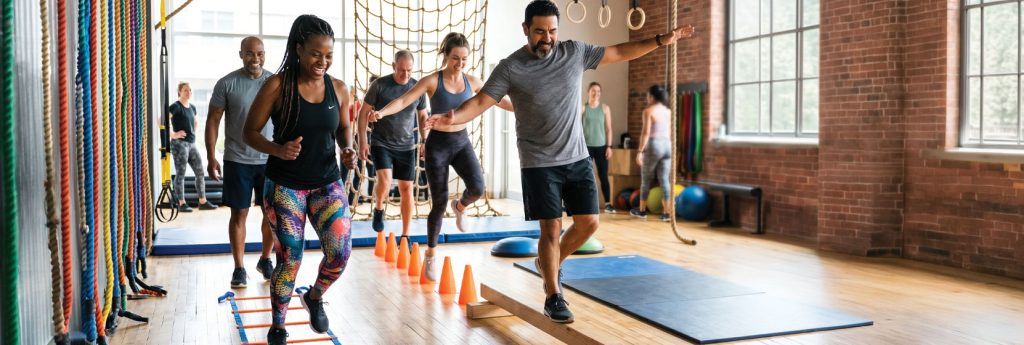
You don’t need a giant obstacle course, warped wall, or television competition to train like a ninja. In fact, some of the most effective ninja-inspired exercises can be integrated into everyday fitness classes, personal training sessions, boot camps, youth programming, and active aging workouts using minimal equipment and creative movement patterns.
Ninja-style training blends functional fitness, athletic play, coordination, and problem-solving into workouts that challenge both the body and the brain. The result? Clients become more engaged, more motivated, and often more consistent because the workout feels less like “exercise” and more like an interactive challenge.
In a fitness industry where many clients become bored with repetitive routines, ninja-inspired movement offers something refreshing: movement with purpose, variety, creativity, and fun.
Why Gamification Works
Research continues to show that gamification—the use of game-like elements in exercise—can significantly increase exercise adherence, enjoyment, and motivation. When clients are given challenges, missions, timed drills, or playful movement tasks, the brain responds differently than it does during repetitive exercise.
Gamified workouts stimulate:
- Dopamine release associated with reward and accomplishment
- Greater focus and reaction time
- Increased intrinsic motivation
- Improved exercise consistency
- Better emotional connection to movement
Clients stop focusing solely on calories burned or repetitions completed and instead become immersed in the process of solving movement challenges. This psychological shift often reduces exercise anxiety and increases confidence, especially in beginners or deconditioned populations.
Ninja-style movement training also incorporates multi-planar movement, reactive drills, balance work, agility, grip strength, and coordination patterns that are often missing from traditional gym routines.
The Science Behind Ninja-Inspired Training
Unlike isolated machine-based exercise, ninja-inspired movement emphasizes integrated functional movement patterns. These movements challenge multiple systems simultaneously, including:
- Muscular strength
- Neuromuscular coordination
- Balance and proprioception
- Reaction time
- Core stabilization
- Grip endurance
- Cardiovascular conditioning
Many ninja drills also improve vestibular function and spatial awareness, which become increasingly important as we age. Reactive balance drills and unstable movement patterns force the nervous system to adapt quickly, strengthening communication between the brain and muscles.
Research has shown that dynamic balance and agility training can improve fall prevention, athletic performance, and overall movement efficiency. Crawling patterns, for example, activate cross-body neurological connections while improving shoulder stability, hip mobility, and core integration.
Grip strength training—one of the cornerstones of ninja-style fitness—is also strongly associated with long-term health outcomes. Studies have linked stronger grip strength to improved functional independence, reduced injury risk, and even lower all-cause mortality rates.
What Makes Ninja Training Different?
Ninja-inspired fitness focuses on movement quality and playful physical challenges rather than aesthetics alone. Clients are encouraged to climb, crawl, balance, carry, react, jump, stabilize, and move in unpredictable ways.
This type of training naturally develops:
- Functional strength
- Coordination
- Athleticism
- Confidence
- Mobility
- Mental resilience
- Body awareness
Perhaps most importantly, it reconnects adults with play-based movement patterns many have not experienced since childhood.
Core Components of Ninja-Inspired Movement
1) Grip Strength Training
Grip strength is foundational in ninja training and essential for daily life. Hanging movements, carries, towel holds, and suspension training strengthen the hands, forearms, shoulders, and core simultaneously. Grip-intensive training also challenges muscular endurance and postural stability while increasing shoulder integrity. Examples include: Dead hangs, farmer carries, towel grip holds, battle rope holds, suspension trainer grips, and monkey-bar style traverses.
2) Balance and Stability Challenges
 Balance training forces the body to stabilize dynamically while reacting to movement changes. This improves ankle strength, core activation, and neuromuscular efficiency. Balance work is especially valuable for older adults because it improves proprioception and fall-prevention strategies. Examples include: BOSU drills, single-leg reaches, ladder footwork, balance beam walks, reactive stepping drills, and uneven surface training.
3) Plyometric and Reactive Training
Plyometrics train the body to generate force quickly while improving reaction time, agility, and cardiovascular conditioning. These drills train acceleration, deceleration, and directional changes while increasing lower-body power. Examples include: Lateral skaters, box jumps, step-over drills, hurdle hops, speed ladder drills, and lateral bounds.
4) Crawling Patterns
Crawling movements are one of the most neurologically stimulating forms of exercise because they integrate the entire body while challenging coordination and core stabilization. These exercises strengthen the shoulders, hips, core, wrists, and stabilizers while increasing mobility and movement awareness. Examples include: Bear crawls, crab walks, leopard crawls, lateral crawls, and reverse crawls.
5) Rotational Core Training
Most daily activities occur in multiple planes of motion, yet many traditional workouts focus primarily on forward-and-backward movement. Ninja-style training integrates rotational patterns that strengthen the core more functionally to improve spinal stability, posture, and movement efficiency. Examples include: Hanging knee tucks, anti-rotation holds, rotational chops, medicine ball tosses, cross-body crawls, and reactive core drills.
Why Trainers Love Ninja-Inspired Workouts
For fitness professionals, ninja-style movement offers endless creativity and adaptability. Clients often stop dreading exercise because the environment becomes playful rather than intimidating.
Trainers Benefit Because:
- Workouts feel fresh and exciting
- Clients become emotionally invested in challenges
- Sessions improve retention and attendance
- Exercises can scale for nearly any fitness level
- Functional movement patterns improve real-life strength
- Clients gain confidence through accomplishment
- Workouts become more interactive and social
Easy Ninja Moves You Can Add Today
The beauty of ninja-inspired training is that you do not need expensive equipment or a specialized facility. Adding just two or three ninja-style challenges into a workout can instantly increase engagement and energy.
- Balance Line Challenge: Place tape lines or agility ladders on the floor and challenge clients to move without stepping off. Add backward walking, head turns, or balance holds for progression.
- TRX Single-Leg Row: Combines upper-body pulling strength, balance, anti-rotation core work, and postural control in one movement.
- Plyo Step-Overs: Quick directional step-overs build agility, coordination, and cardiovascular endurance while improving lower-body power.
- Stepping Stones: Use cones, plates, or markers as “safe zones” across the room. Clients must move strategically between them without touching the floor outside the markers.
- Hanging Knee Tucks: A powerful exercise for grip strength, shoulder stability, and core activation.
- Animal Crawls: Crawling patterns improve total-body coordination, mobility, and strength while creating an immediate sense of playfulness.
- BOSU Target Toss: Combine reactive balance with hand-eye coordination by tossing balls or targets while standing on unstable surfaces.
Ninja Training for All Populations
One of the biggest misconceptions about ninja-style movement is that it is only for athletes or younger clients. In reality, the principles can be modified for nearly every population.
Youth Programming: Children thrive on challenge-based movement. Ninja games improve coordination, confidence, and physical literacy while reducing screen-time dependence.
Adult Fitness: Adults benefit from functional movement restoration, stress relief, and renewed enjoyment of exercise.
Active Aging: Modified ninja-inspired drills can dramatically improve balance, reaction time, gait mechanics, and fall prevention in older adults.
Athletes: Athletes benefit from improved agility, grip strength, coordination, and movement variability.
The Bottom Line
Ninja-style training is far more than obstacle-course entertainment. It is functional, playful, neurologically stimulating movement that improves strength, coordination, confidence, and exercise enjoyment.
By adding challenge-based movement, reactive drills, crawling patterns, balance work, and playful competition into workouts, trainers create an environment where clients feel successful, empowered, and excited to return.
And perhaps the greatest benefit of all? People stop viewing exercise as punishment and start experiencing movement as something fun again.
About the Author: Christine Conti
Christine is an international fitness educator, chronic disease wellness specialist, and recipient of the IDEA World 2023 Fitness Instructor of the Year. She is the CEO of FITFIXNOW, as well as the founder of ContiFit, the COO of Reinventing the Woman International, and the Co-Host of the Two Fit Crazies and a Microphone Podcast. Christine is the best-selling author of SPLIT-SECOND COURAGE, as well as a corporate wellness consultant and keynote speaker. When she is not traveling for work, you can find her running marathons, competing in IRONMAN or guiding Special Olympic athletes. After receiving a life-changing diagnosis at age thirty, this former investment banker/English teacher believes that ANYTHING IS POSSIBLE!

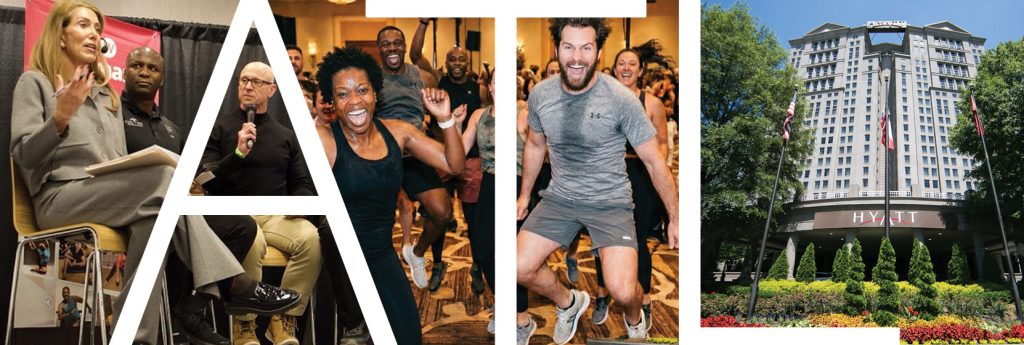
If you’ve been craving fresh ideas, renewed energy, powerful education, and meaningful connections in the fitness industry, your next big opportunity is almost here. From July 31–August 2, 2026, fitness professionals from across the country will gather at the stunning Grand Hyatt Atlanta in Buckhead for one of the most exciting weekends in fitness education.
This isn’t just another conference. Atlanta MANIA® is where education meets inspiration, where workouts meet networking, and where fitness professionals at every level come together to grow stronger—professionally and personally.
Whether you’re looking to elevate your career or recharge your passion, Atlanta MANIA® offers an experience designed specifically for:
- Group Fitness Instructors
- Personal Trainers
- Aquatic Professionals
- Wellness Coaches
- Pilates & Yoga Teachers
- Fitness Managers
Three Days of Energy, Education, and Connection
Imagine spending an entire weekend surrounded by hundreds of motivated fitness professionals who share your passion for helping others live healthier lives. Atlanta MANIA® delivers over 200 sessions packed with practical tools, innovative programming, hands-on training, and real-world strategies you can immediately apply to your classes, clients, and business.
From sunrise workouts to evening networking events, the atmosphere is electric. Every hallway conversation sparks a new idea. Every workshop leaves you inspired. Every presenter brings decades of expertise and contagious enthusiasm.
The best part? You can customize your schedule to fit your interests and goals. Dive into sessions on personal training, group fitness, wellness, recovery, active aging, aqua, business development, leadership, mind-body training, and more. Whether you’re looking to sharpen your coaching skills, learn cutting-edge programming, or discover ways to grow your business, there’s truly something for everyone.
Learn From the Best in the Industry
One of the biggest reasons fitness professionals return to MANIA® year after year is the incredible lineup of world-class presenters. Atlanta MANIA® brings together leading educators and fitness innovators from around the globe for a weekend full of motivation, creativity, and high-level learning.
These are the presenters shaping the future of fitness—industry leaders who understand what’s working right now and where the industry is heading next. Their sessions are practical, inspiring, and designed to help you stand out in an increasingly competitive field.
You won’t just sit and listen. You’ll move, train, practice, collaborate, and experience fitness education in a way that keeps you engaged from start to finish.
Earn Valuable CECs and CEUs
For fitness professionals, continuing education is essential—and Atlanta MANIA® makes it exciting. Attendees can earn 20+ CECs/CEUs from many of the industry’s top certifying organizations, including ACE, NASM, AFAA, AEA, ACSM, and more.
Instead of scrambling to piece together continuing education throughout the year, MANIA® allows you to earn credits while enjoying an immersive, energizing experience filled with learning and connection.
 Stay Onsite and Maximize the Experience
One of the smartest ways to experience MANIA® is by staying onsite at the beautiful Grand Hyatt Atlanta in Buckhead. Special event rates start at just $179 per night—far below the hotel’s regular pricing—making it affordable to stay close to all the action.
And because many attendees room with friends or colleagues, the experience becomes even more fun and budget-friendly. Staying onsite means you never miss a moment, whether it’s an early-morning workout, spontaneous networking opportunity, or late-night conversation with fellow fitness professionals.
Can’t Attend Live? MANIA® Comes to You
Life gets busy, and sometimes traveling isn’t possible. That’s why Atlanta MANIA® offers incredible flexibility through online recordings.
Attendees can access over 160 recorded sessions, including presentations recorded live at Atlanta MANIA® and additional sessions from recent events.
Add the recordings to your in-person registration for only $60 and enjoy 60 days of unlimited access.
Purchase the recordings separately for only $399.
Expand Your Career With Certifications
Want to take your career even further? MANIA® also offers the opportunity to add certifications before or after the convention. By attending certification courses on Thursday and/or Sunday, you can gain specialized skills, earn additional CECs, and walk away with respected credentials that help you stand out professionally.
Choose from 10 in-person certifications including:
- Active Aging with Ann Gilbert
- Personal Training with Gail Bannister-Munn
- Group Exercise with Jani Roberts
- New! Pilates Reformer Fundamentals with Leslee Bender
SCW Fitness also offers more than 50 globally recognized online certifications covering disciplines such as Group Exercise, Personal Training, Active Aging, Pilates, Aquatics, and more. Available live, live-streamed, and online, these programs provide comprehensive education designed for today’s evolving fitness industry.
More Than a Convention—A Fitness Community
For more than 40 years, SCW has been a trusted leader in fitness education worldwide. Through conventions, certifications, webinars, summits, newsletters, podcasts, and innovative programs, they continue to support fitness professionals at every stage of their careers.
But what truly makes MANIA® special is the sense of belonging.
Fitness can sometimes feel isolating when you spend your days coaching clients, teaching classes, or running businesses. MANIA® reminds professionals why they fell in love with fitness in the first place. It’s a chance to reconnect with your purpose, meet people who understand your passion, and return home energized with fresh ideas and renewed confidence.
A Powerful Opportunity for Brands and Businesses
Atlanta MANIA® is also an incredible platform for brands looking to connect directly with the fitness industry. Sponsors, exhibitors, and advertisers gain exposure to a massive network of fitness professionals through live events, email campaigns, text marketing, webinars, podcasts, newsletters, and social media outreach.
The convention expo floor buzzes with activity as attendees discover new products, equipment, services, technology, apparel, recovery tools, and wellness innovations. With booths conveniently located near session areas and networking spaces, brands receive maximum visibility and meaningful face-to-face engagement.
Your Next Step Starts Here
The fitness industry never stops evolving—and neither should you. Whether you’re looking to earn CECs, build new skills, grow your network, discover innovative programming, or simply reignite your passion for fitness, Atlanta MANIA® delivers an unforgettable experience.
Three days. Hundreds of sessions. Endless inspiration.
Atlanta MANIA® isn’t just about learning what’s next in fitness—it’s about becoming part of the movement that’s driving the industry forward.
By Nick Tumminello
Every week there’s a new exercise, method or “expert” claiming they’ve cracked the code.
The problem isn’t a lack of information. It’s so much conflicting information. That’s why I’m sharing my simple way to quickly separate sense from the nonsense.
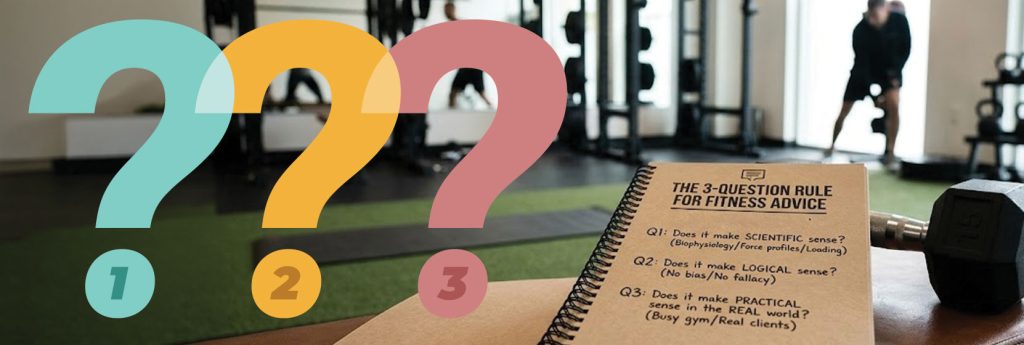
So, when I evaluate any fitness advice — whether it comes from a study, a coach or social media — I run it through three simple questions:
- Does it make SCIENTIFIC sense?
- Does it make LOGICAL sense?
- Does it make PRACTICAL sense in the real world?
If it doesn’t pass all three, I don’t care how popular it is, how “good” it may sound or who said it — it’s probably nonsense.
 I’ll break down exactly what I mean by each of these criteria and how you can easily use this filter to avoid getting misled.
What Those 3 Questions Really Mean
Each of these questions has two key parts, and together they form the standard fitness advice has to meet before I take it seriously.
1. Does it make SCIENTIFIC sense?
Here’s what I mean – I’m really asking these two questions:
PART 1: Does it fit with basic biomechanics and physiology? This means looking at how it does or doesn’t align with what we already know about how the body produces force, the basic physics involved with the loading profiles, how training adaptations actually occur, etc.
PART 2: What does the relevant research say — when it exists? This means looking beyond cherry-picked studies or flashy headlines and considering the overall direction of the evidence in that area.
BOTTOM LINE: If it doesn’t line up with how the body works or the current relevant body or research, that’s a red flag.
2. Does it make LOGICAL sense?
This is where a lot of advice completely collapses. Again, this comes down to two questions:
PART 1: Is the argument driven by bias rather than reasoning? This means evaluating if the person is relying on arbitrary rules, personal preferences, or rigid beliefs about what exercises are “good” or “bad,” or how the body should function — without a sound rationale.
PART 2: Is the claim built on logical fallacies? This means using confidence, credentials, or anecdotes as proof, or framing arguments as false either/or choices instead of examining the full picture, etc.
BOTTOM LINE: Confidence, credentials, and achievements are not the same thing as sound logic.
3. Does it make PRACTICAL sense in the real world?
This is where a lot of “science-based” advice falls apart. Again, this comes down to two questions:
PART 1: Is this realistic in real-world training environments? This means it can actually be implemented with busy schedules, busy gyms, mixed ability levels, limited equipment, etc. — not ideal scenarios.
PART 2: Will everyday clients or athletes actually buy into this? This means it’s simple enough to understand, meets a real free-market demand, is flexible enough to fit real lives, etc. — because adherence matters more than theoretical perfection.
BOTTOM LINE: If it only works in a lab setting or just looks good on Instagram, it’s probably not useful.
Why This Matters
The best fitness advice isn’t just science-based — it’s logically sound and practically usable. Fail one, and it’s noise, not guidance.
 About the Author: Nick Tumminello
Nick is known as the “Trainer of Trainers.” He has been a trainer for over 20 years working NFL and MMA athletes, bodybuilders and fitness enthusiasts. Nick is the 2016 NSCA Personal Trainer of the Year, the editor-in-chief of the NSCA’s PTQ journal, and he has authored four books, including the best-selling Strength Training for Fat Loss.
Your typical client or class participant likely knows a little bit about resistance training, from reps and sets to circuit training and split routines. However, what the average gym-goer may overlook—particularly if they have never worked with an exercise professional before—is the value derived from appropriate recovery between sets, between exercises, and between workouts.
 This is an area where you, as an exercise professional, can demonstrate your expertise and value by manipulating this often-overlooked element of exercise programming to derive maximal benefits and help clients reach their goals.
When designing resistance-training programs for your clients, you create overload by systematically manipulating several training variables, including:
- Repetition range
- Exercise selection
- External load
- Order of exercises
- Volume
- Velocity of muscle actions
- Frequency
- Rest intervals (RIs)
The RI is defined as the time dedicated to recovering between sets and between exercises during sessions of resistance training. There are several purposes for RIs, including replacing the utilized energy (i.e., ATP-CP), reducing the acidosis in the contracting muscles, and removing accumulated lactate from the exercising muscles.
“Lactate production during exercise is an important and easy way to measure for ‘metabolic stress.’ Metabolic stress has been shown to be a primary mechanism for muscle hypertrophy to occur.” — Dr. Len Kravitz, Lead Author and Professor of Exercise Science at the University of New Mexico
Metabolic stress is an exercise-induced accumulation of metabolites, including lactate, hydrogen ions (H+), and inorganic phosphate. Most of the lactate produced during exercise is broken down by skeletal muscles working at a lower intensity and then distributed in the blood in the recovery phase of exercise. Current research indicates that active recovery, which involves performing low-intensity activity such as walking or yoga after exercise, leads to a faster clearance of this accumulated blood lactate than a passive (resting) recovery.
Historically, it was believed that shorter RIs were better for continuously building larger muscles because they increased levels of anabolic hormones, such as growth hormone, insulin growth factor 1, and testosterone. Current evidence, however, indicates that short and long RIs are equally effective for achieving gains in muscular size.
Notably, as you know, the quality of a client’s training may decline if their RIs are too short. This may result in declining power production, strength output, repetition number, and total volume of your clients’ workouts. It’s important to note that, in research, total volume lifted is calculated as the product of Sets x Repetitions x Load. Studies have demonstrated that higher training volumes are essential for long-term resistance-training outcomes in strength and hypertrophy.
The Study
A piece of ACE-supported research conducted by Len Kravitz, PhD, and a team of researchers at the University of New Mexico – Albuquerque explored one element of in-session recovery by looking at the impact of varying RIs on the performance of upper- and lower-body exercises (i.e., the chest press and leg press).
More specifically, the purpose of this study was to measure the effect of 1-minute (SHORT) and 3-minute (LONG) RIs on total volume lifted, fatigue, and lactate production during low-to-moderate intensity [75% of ten-repetition maximum (10-RM)] resistance training among trained female lifters.
The Methodology
Fourteen healthy, resistance-trained women (average age 23 years and average percent body fat of 21.7%) volunteered for this study. On average, participants had performed total-body resistance exercise two days per week for more than five years. Additionally, they all had experience doing the chest press and leg press exercises with variable intensities (i.e., 12 to 20 repetitions per set) and regularly performed failure sets (i.e., sets of resistance training to the point of “failure,” or when another repetition cannot be performed).
Visit 1: Each participant’s 10-RM was determined for the chest press and leg press exercises, and they performed one failure set of each exercise to familiarize themselves with how that felt. Height, weight, and skinfold measurements were taken to estimate body density and body-fat percentage.
Visits 2 & 3: Participants returned for two more visits: one with SHORT RI trials and one with LONG RI trials. They performed the chest press and leg press with proper lifting technique, at the same cadence, and to exercise failure.
 For both trials, participants completed a 5- to 10-minute self-selected dynamic warm-up, followed by two warm-up sets of 10 repetitions (50% of 10-RM and 60% of 10-RM) before completing four sets of the leg press or chest press exercises (to failure) at 75% of their 10-RM. There were five to seven days between trials, the order of which was randomized, and 30 minutes of rest between the chest press and leg press trials (within each session).
During the workouts, researchers measured total volume lifted, fatigue index, repetitions performed, blood lactate, and rating of perceived exertion.
The Results
Total Volume Lifted: The main finding of this study is that the total volume lifted for the SHORT RI session was significantly less than that seen in the LONG RI session for both exercises (Figure 1).
Fatigue: As measured by the fatigue index (calculated by subtracting the repetition number in the fourth set from the repetition number in the first set and dividing by the repetition number in the first set), fatigue was greater in the SHORT RI session than in the LONG RI session for both exercises (Figure 2).
Lactate Production: There was no significant difference in lactate production in the SHORT and LONG RIs for either the chest press or the leg press exercise (Figure 3).
Repetition Decline: Regardless of the rest interval or exercise, the largest decline in the number of repetitions that participants could complete occurred consistently between the first and second set. Sets three and four seem to reflect a plateau in terms of the number of repetitions (Figure 4). However, this may be a finding that is specific to the intensity of exercise (75% of the 10-RM) and the sample population (trained females) of this study.
Finally, the researchers concluded that the participants experienced fatigue in the upper- and lower-body at about the same rate when the exercises were performed at a low-to-moderate intensity. In addition, the rate of fatigue was slower when using three-minute rest intervals when compared to the one-minute rest interval.
The Bottom Line
Based on the results of this study, the researchers concluded that three-minute rest intervals are better for female lifters who want to optimize the total volume lifted with low-to-moderate intensity resistance training. > “Therefore, if hypertrophy and/or strength is a priority goal for female clients, personal trainers should incorporate three-minute rest intervals between sets during multiple-set training sessions.”
This study was first published in the peer-reviewed International Journal of Exercise Science.
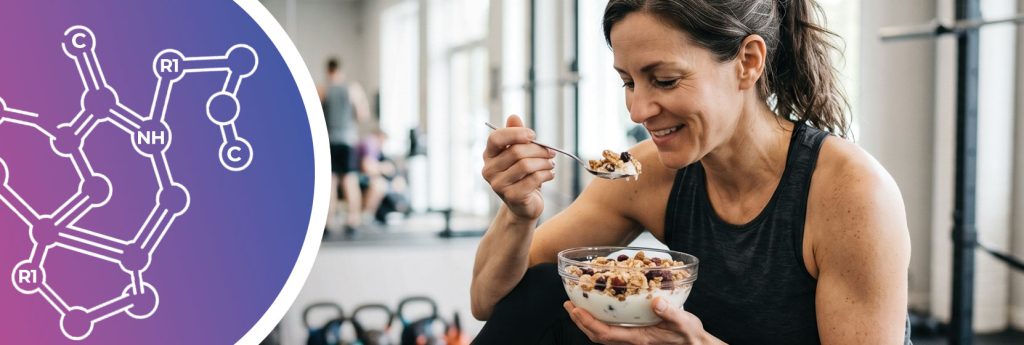
When most people think about improving fitness results, they focus on the workout itself—lifting heavier weights, increasing repetitions, or pushing harder during cardio sessions. However, what happens after exercise is just as important as the workout itself.
Recovery is where the body adapts, repairs, and grows stronger. And two nutrients play a critical role in this process: protein and carbohydrates.
 Whether your clients are athletes, weekend warriors, or active older adults, understanding the importance of proper post-workout nutrition can help maximize results, reduce soreness, and improve overall performance.
The Recovery Process
Exercise, particularly resistance training and high-intensity workouts, creates microscopic damage to muscle fibers. While this sounds negative, it is actually a normal and necessary part of building strength and endurance. During recovery, the body repairs these tiny tears, making muscles stronger and more resilient.
At the same time, exercise depletes glycogen, the stored form of carbohydrates found in the muscles and liver. Glycogen serves as the body’s primary fuel source during moderate-to-high intensity exercise. Once glycogen stores are depleted, energy levels decline and fatigue increases.
This is where protein and carbohydrates work together to support optimal recovery.
Protein: The Building Block of Recovery
Protein is essential for repairing and rebuilding muscle tissue after exercise. It is made up of amino acids, often referred to as the “building blocks” of muscle. Following a workout, the body becomes especially receptive to using amino acids for muscle repair and growth.
Consuming adequate protein after exercise stimulates muscle protein synthesis, the process responsible for repairing damaged muscle fibers and building new tissue. Without enough protein, recovery may be delayed, soreness may increase, and muscle gains can be compromised.
Research suggests that consuming approximately 20–30 grams of high-quality protein after exercise is effective for most active adults.
Excellent protein sources include:
- Greek yogurt
- Eggs
- Chicken or turkey
- Fish
- Cottage cheese
- Protein smoothies
- Tofu or tempeh
- Milk or chocolate milk
Protein is particularly important for individuals participating in strength training, since resistance exercise places significant stress on the muscles. However, endurance athletes also benefit from adequate protein intake, especially during periods of intense training.
Carbohydrates: Refueling the Muscles
While protein often gets the spotlight in fitness nutrition, carbohydrates are equally important for recovery. During exercise, glycogen stores become depleted. If those stores are not replenished, fatigue can linger and future performance may suffer.
Carbohydrates help restore muscle glycogen levels, allowing the body to recover faster and prepare for the next workout. This is especially important for people who train frequently or participate in multiple workouts per week.
Post-workout carbohydrates also help reduce the breakdown of muscle tissue by stimulating insulin release. Insulin helps shuttle nutrients, including amino acids from protein, into muscle cells where recovery takes place.
Some healthy carbohydrate choices include:
- Fruit
- Oatmeal
- Whole-grain toast
- Brown rice
- Sweet potatoes
- Quinoa
- Beans
- Low-fat granola
The amount of carbohydrates needed depends on the intensity and duration of exercise. Endurance athletes and highly active individuals generally require more carbohydrates than recreational exercisers.
Why Protein and Carbs Work Better Together
Protein and carbohydrates are most effective when consumed together after exercise. This combination helps the body repair damaged tissue while simultaneously restoring energy stores.
For example, pairing Greek yogurt with fruit, a turkey sandwich on whole-grain bread, or a protein smoothie with a banana provides both muscle-building protein and energy-restoring carbohydrates.
Research shows that combining these nutrients after exercise can improve recovery, support muscle growth, and reduce muscle soreness more effectively than consuming protein alone.
Timing Matters
The timing of post-workout nutrition can also influence recovery. While the old idea of a strict 30-minute “anabolic window” may be overstated, consuming protein and carbohydrates within approximately two hours after exercise appears beneficial for recovery and muscle repair.
This becomes even more important for individuals completing multiple training sessions in a day or training intensely several days per week.
That said, total daily nutrition still matters most. Consistently consuming balanced meals with adequate protein and carbohydrates throughout the day supports long-term performance, recovery, and body composition goals.
Practical Recovery Snacks
Many people struggle with post-workout nutrition because they either skip meals or choose foods lacking balance. Encouraging simple, portable recovery snacks can make a significant difference.
Some easy, balanced options include:
- Chocolate milk and a banana
- Apple slices with peanut butter
- Cottage cheese and berries
- A turkey wrap
- Protein oatmeal
- Greek yogurt with granola
- A smoothie made with fruit and protein powder
These snacks provide a combination of nutrients that help the body recover efficiently and prepare for future workouts.
The Bottom Line
Exercise challenges the body, but recovery is where progress truly happens. Protein helps repair and rebuild muscle tissue, while carbohydrates restore energy stores and support the recovery process. Together, these nutrients play a vital role in helping clients recover faster, perform better, and achieve their fitness goals.
For fitness professionals: Educating clients about post-workout nutrition can be just as impactful as designing an effective training program. When clients understand how to fuel recovery properly, they are more likely to experience improved strength, reduced fatigue, and better long-term results.

Energy, Resilience, and Healthy Aging: A R.E.A.L. Approach for Fitness Professionals
By Jessica Moyer
In today’s high-demand fitness industry, professionals are often the first to pour into others—yet the last to prioritize their own well-being. Behind the scenes, many are navigating fatigue, burnout, and inconsistency in their own routines.
The truth is, knowing what to do isn’t the problem—sustaining it is.
For me, this realization didn’t come from a textbook—it came from real life.
There was a season where I was doing everything “right” on paper—staying active, showing up for others, pushing through—but internally, I was exhausted. Life had shifted, my responsibilities had grown, and the routines that once worked no longer fit the season I was in.
It forced me to step back and ask a different question:
What actually works in real life—and what can I sustain?
That question became the foundation of what I now teach as the R.E.A.L. Wellness Framework.
As our clients age—and as we do—the conversation must shift from intensity and aesthetics to energy, resilience, and longevity. Healthy aging is not about doing more; it’s about doing what works consistently over time.
R — Realistic Foundations
Programs often fail because they are not built for real life. Fitness professionals may prescribe ideal plans that don’t align with a client’s schedule, stress level, or energy capacity.
Sustainable change begins with honesty:
What can you—and your clients—consistently commit to in this season?
Shorter workouts, simplified nutrition, and flexible routines are not compromises—they are strategies for long-term success.
E — Energy as the Priority
Energy is the foundation of performance, recovery, and consistency—yet it is often overlooked.
Clients do not need more intensity; they need more capacity.
Sleep, nutrition (especially adequate protein), hydration, and stress management are essential for energy production. Without them, even the best-designed program will fall short.
Fitness professionals must begin asking:
Am I helping my clients build energy—or deplete it?
A — Aligned Action
Overcomplication is one of the biggest barriers to consistency.
When clients are given too many goals, they often do none of them well. Instead, focus on 1–3 high-impact actions that align with their lifestyle.
Consistency builds confidence.
Confidence builds momentum.
Aligned action ensures progress is not only achieved—but maintained.
L — Love and Longevity
The most overlooked element in coaching is compassion.
Self-criticism and all-or-nothing thinking contribute to burnout and dropout. Clients don’t need more pressure—they need support, understanding, and a space to rebuild trust with themselves.
When individuals feel supported rather than judged, adherence improves—and transformation becomes sustainable.
Redefining Success
Healthy aging is not defined by extremes. It is built through daily habits that support strength, mobility, metabolic health, and mental well-being.
For fitness professionals, this means shifting from:
- Intensity → Sustainability
- Short-term results → Long-term outcomes
- Programming → Behavior change
Because our role is not just to train bodies—it’s to help people build lives they can sustain.
 The Takeaway
Life, stress, and aging will challenge consistency. The goal is not to avoid these challenges—but to build a foundation strong enough to navigate them.
The R.E.A.L. Framework was built not just from theory, but from experience—through seasons that required adjustment, honesty, and a different approach to health.
When fitness professionals apply it—first to themselves, then to their clients—they create a model of health that is not only effective, but enduring.
Healthy aging isn’t accidental. It’s built—intentionally, consistently, and R.E.A.L.


A quick, energizing snack that’s easy to pack for strength-training days.

Ingredients:
- 1 banana, mashed
- 1 cup rolled oats
- 1/3 cup natural peanut butter
- 1 scoop vanilla or chocolate protein powder
- 1 tbsp chia seeds
- Optional: mini dark chocolate chips or cinnamon
Directions:
Mix everything together, roll into bite-sized balls and refrigerate for 20 minutes. Store in a container or zip bag for an easy pre- or post-workout gym snack.
Why it works:
Balanced carbs for energy, protein for muscle recovery and healthy fats for staying power.


We’re always looking for great content highlighting the newest things in the world of fitness. Please submit your article directly to editor@scwfit.com for immediate consideration!